Quartz costs roughly $70–$100 per square foot installed and lands near $4,500 for a typical kitchen. Granite runs $40–$60, closer to $3,250.
So granite is cheaper. It is also the one that asks something of you every year, and that annual ask is what the decision really turns on.
Side by side
| Quartz | Granite | |
|---|---|---|
| Installed, per sq ft | $70 – $100 | $40 – $60 |
| Typical kitchen | ~$4,500 | ~$3,250 |
| What it is | Engineered: ground stone + resin | Natural stone, quarried in slabs |
| Sealing | Never | Yearly |
| Porous | No | Yes |
| Heat | Resistant, not heatproof — a hot pan can discolour or crack it | Genuinely excellent |
| Scratches | Very resistant | Very resistant |
| Pattern | Consistent, predictable | Every slab unique |
| Lifespan | Decades | Up to 100 years |
| Resale | A tie — personal taste drives it | |
The sealing question, honestly
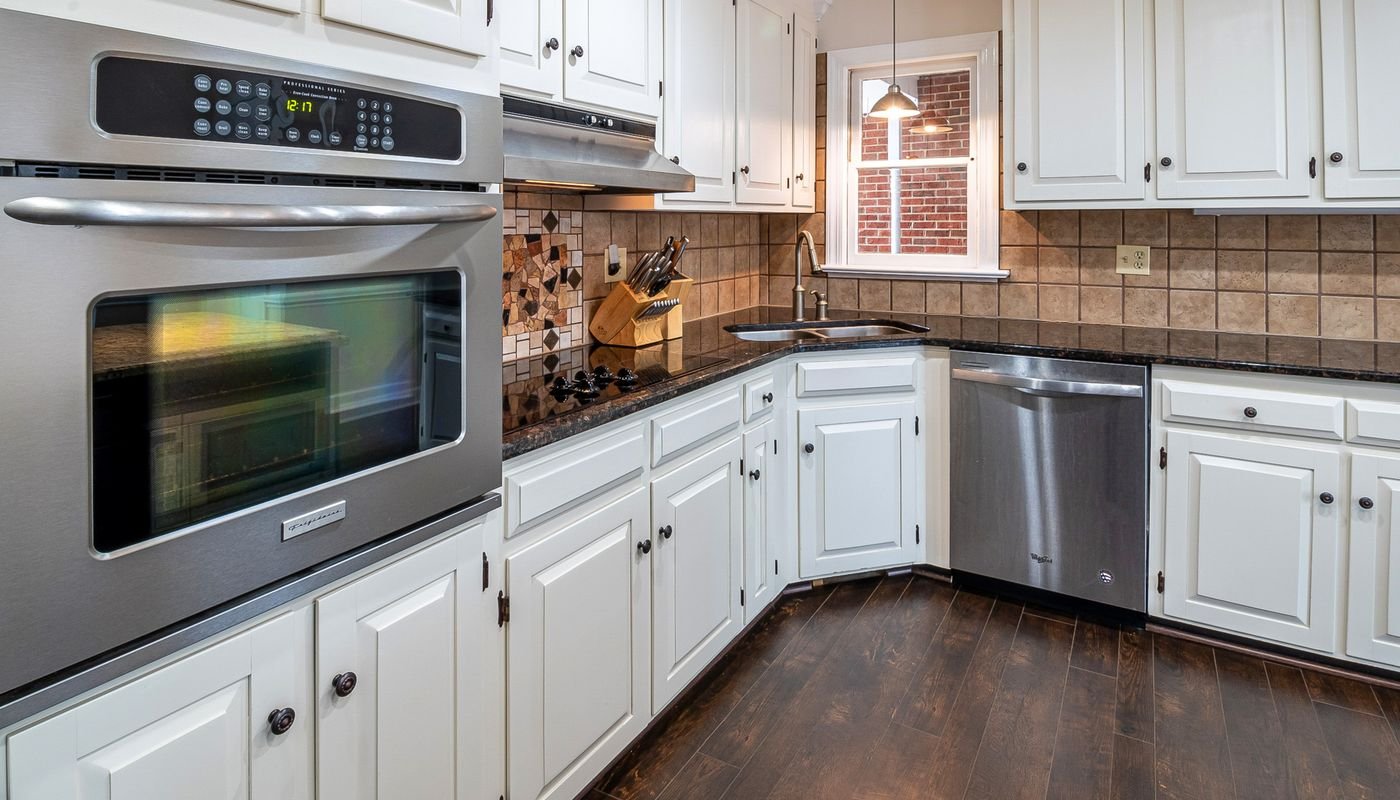
Granite is porous. Unsealed, it absorbs red wine, oil, and lemon juice, and those stains do not come out. Sealing takes about twenty minutes once a year with a $20 bottle.
Twenty minutes a year is nothing. The catch is that almost nobody does it.
Ask yourself honestly whether you are the kind of person who will notice a calendar reminder in eighteen months and act on it. If yes, granite is excellent value — $1,250 cheaper on a typical kitchen and it will outlive you. If you know you will not, quartz’s nonporous surface removes the failure mode entirely, and that is what the extra money buys.
There is a simple test: is the granite sealed properly right now in the kitchen you have? Water beading on the surface means yes. Water darkening the stone after a few minutes means it needs resealing, and tells you something about the last few years.
Where quartz genuinely loses
Heat. This surprises people, because quartz is marketed as tougher. The resin binding it softens at high temperature. A pan straight from a 200°C oven onto quartz can leave a discoloured mark or a fine crack, and neither is repairable. Granite shrugs it off.
If you cook seriously and trivets are not part of your routine, this matters more than the sealing question.
Sunlight. Some quartz yellows under prolonged direct UV. In a kitchen with big south-facing windows, or an outdoor kitchen, granite is the safer stone.
Where granite genuinely loses
Predictability. Every granite slab is different, so what you see in a showroom sample is not what arrives. You should select your actual slab at the yard, in person — and that is a trip most people do not realise they need to make.
Seams. Natural veining rarely lines up across a seam. On a large island with two slabs, the join is visible in a way it is not with quartz’s consistent pattern.
Colour range. If you want a bright white surface with fine grey veining, granite mostly cannot do it. That look is why quartz took over the market.
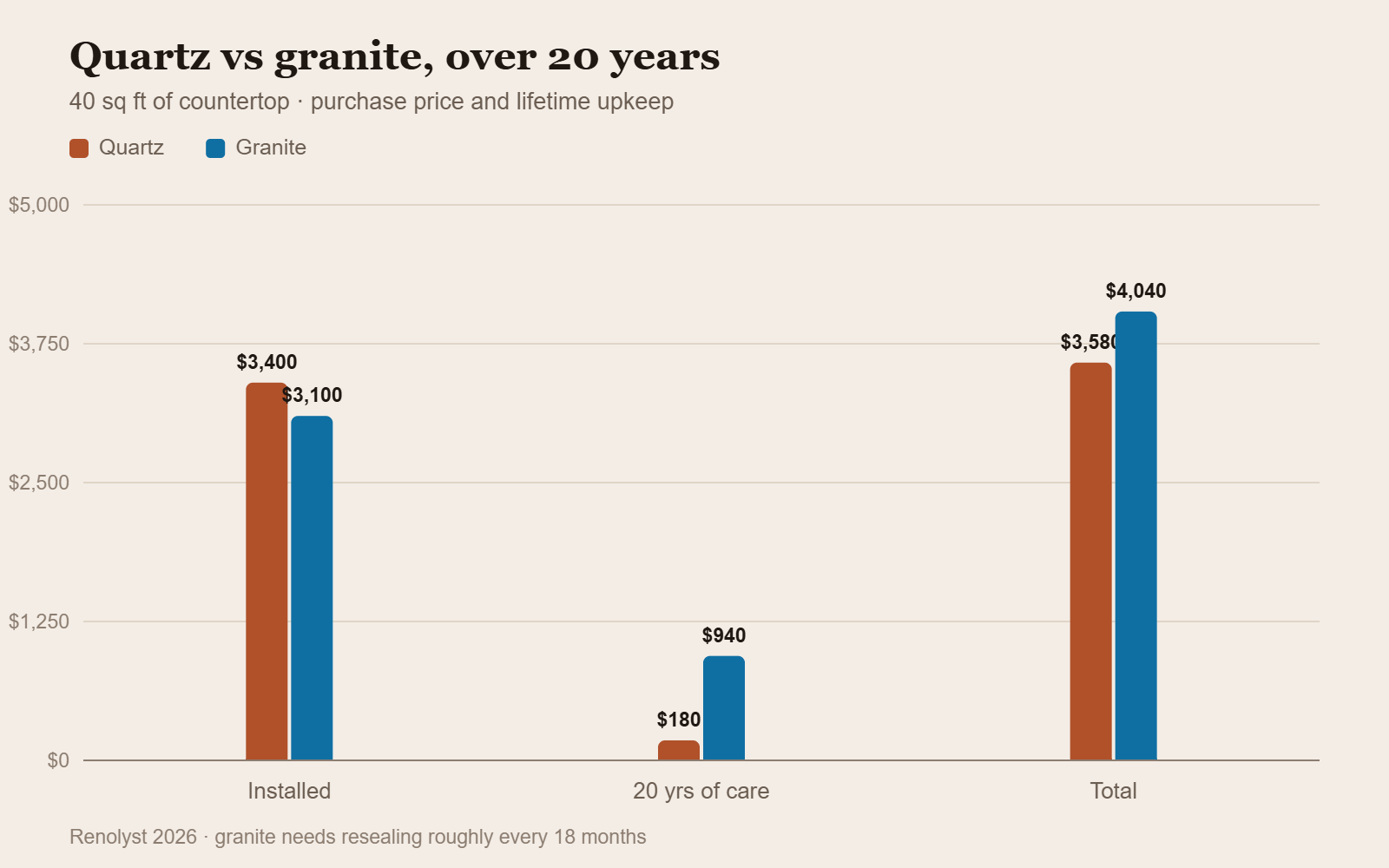
Cost over twenty years
| Quartz | Granite | |
|---|---|---|
| Installed | $4,500 | $3,250 |
| Sealer, 20 yrs | $0 | ~$400 |
| Your time | none | ~7 hours total |
| Total | $4,500 | ~$3,650 |
Granite stays cheaper even counting maintenance. The gap is about $850 over twenty years — real money, but not enough to override a genuine preference either way.
Which to pick
- You cook hot and often: granite
- You will not maintain anything: quartz
- You want white with fine veining: quartz
- Big sunny windows or outdoor kitchen: granite
- Large island, worried about seams: quartz
- Tightest budget: granite
- Rental property: quartz — tenants will not seal anything
Frequently asked questions
Can either be repaired?
Granite chips can be filled with colour-matched epoxy and largely disappear. Quartz damage is harder to hide, because the resin cannot be matched as convincingly. Neither should be treated as repairable in the way a wooden worktop is.
Is quartz the same as quartzite?
No, and the names cause real confusion. Quartz is engineered. Quartzite is a natural stone that behaves like granite — porous, needs sealing, excellent with heat — and typically costs more than either.
What about cheaper options?
Laminate at $10–$40 per square foot installed remains far cheaper and has improved a great deal. In a rental or a short-term kitchen it is a perfectly rational choice; it just will not last decades.
Do I have to visit the stone yard?
For granite, yes. Slabs vary enormously and you are choosing a specific one, not a product code. For quartz, no — the sample is the product.
Which adds more resale value?
Neither, measurably. Both read as “stone countertops” to a buyer. Choose for how you will live with it.
The short version
Granite is cheaper, handles heat better, and asks twenty minutes a year. Quartz costs about $1,250 more on a typical kitchen and asks nothing at all. Be honest about which of those you actually want, and either answer is defensible.
Pricing reflects national US figures as of August 2026. Countertops are typically 8–15% of a kitchen budget — see our full kitchen cost breakdown.
Get the numbers before you get the quote
New cost guides as we publish them, and revisions when material and labour prices move. No more than one email a week.
Related guides
- Cost to Convert a Garage Into a Room in 2026
- Cost to Convert a Tub to a Walk-In Shower in 2026
- Vinyl Plank Flooring Problems: What Actually Goes Wrong
Working out your own number? Our free renovation cost calculator gives you the range for your size and area in about ten seconds.
8 thoughts on “Quartz vs Granite Countertops: Cost, Upkeep and Which to Buy”