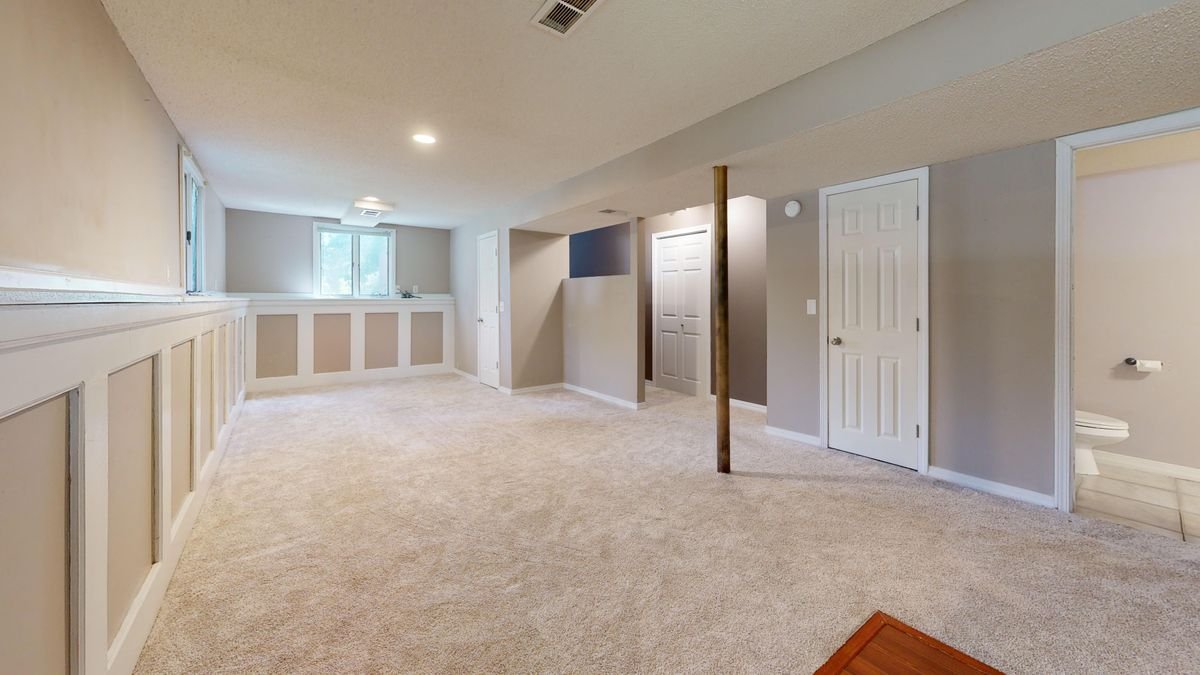
Finishing a basement averaged $32,000 in 2026 and runs $7 to $23 a square foot. The spread is enormous — $2,800 at one end, $100,000 at the other — and the reason is that “finishing a basement” describes two completely different projects that share a name.
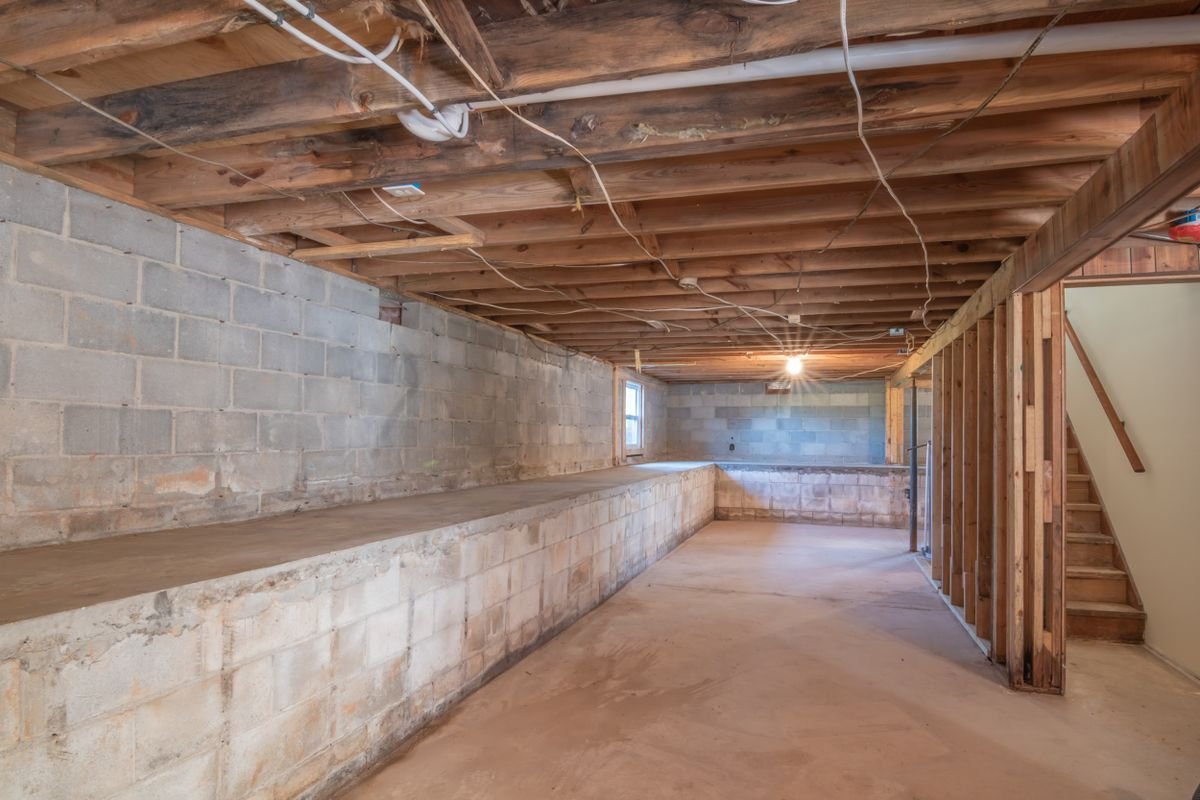
One is a dry, tall, already-conditioned space that needs framing, drywall, flooring and lights. The other has water problems, seven-foot ceilings, a boiler in the middle and no egress. The first is the low end of that range. The second is why the high end exists.
The 2026 numbers
| Measure | 2026 figure |
|---|---|
| National average | $32,000 |
| Common range | $15,000 – $75,000 |
| Per square foot | $7 – $23 |
| Recouped at resale | 64% – 70% |
| Building permit | $1,200 – $2,000 |
| Basement size | Finished cost |
|---|---|
| 500 sq ft | $3,500 – $11,500 |
| 750 sq ft | $5,250 – $17,250 |
| 1,000 sq ft | $7,000 – $23,000 |
| 1,500 sq ft | $10,500 – $34,500 |
| 2,000 sq ft | $14,000 – $46,000 |
Where the money goes
| Element | Cost |
|---|---|
| Framing | $7 – $16 per sq ft |
| Ceiling | $9 – $13 per sq ft |
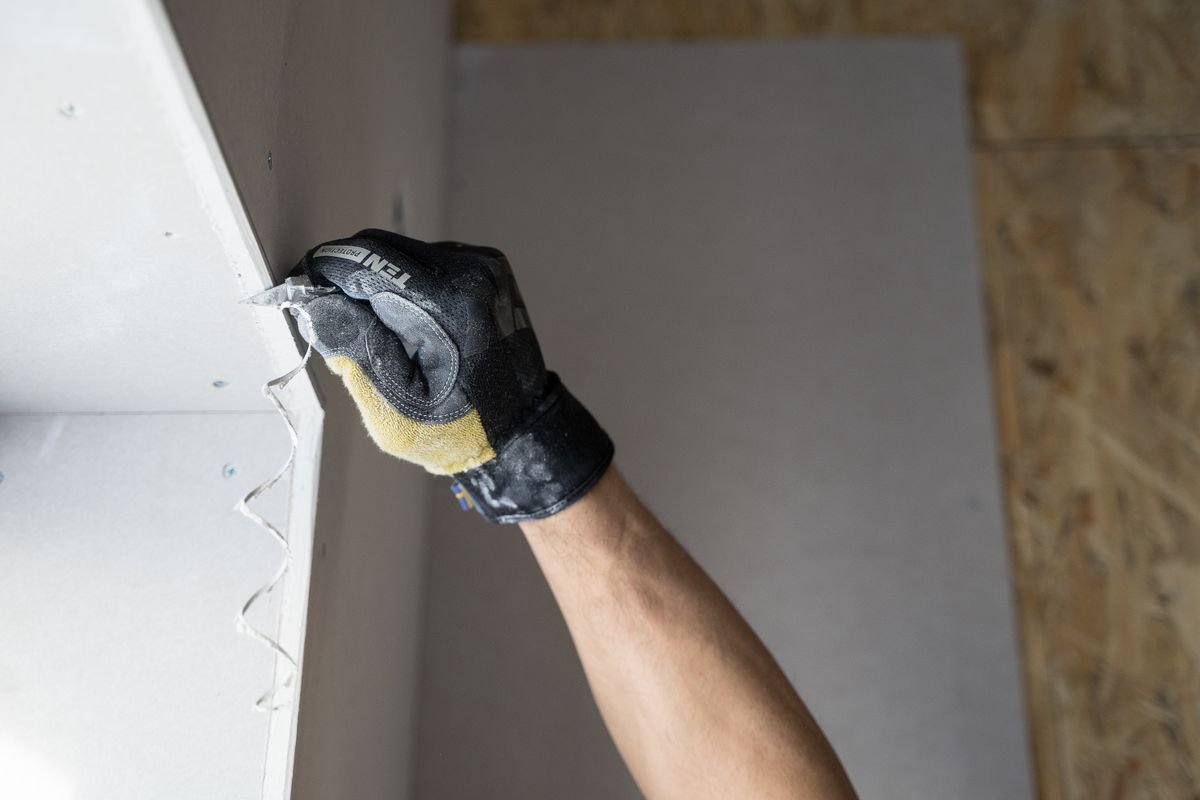
| Drywall | $1.50 – $3 per sq ft |
| Insulation | $0.30 – $6.75 per sq ft |
| Flooring | $1,500 – $4,500 (≈$3,000 for 500 sq ft) |
| HVAC extension | $2,000 – $3,000 |
| Electrical outlet | $100 – $450 each |
| Light switch | $60 – $300 each |
| Light fixture | $150 – $900 each |
| Egress window | $200 – $950 each |
| Paint, whole project | ~$1,800 |
Two rows in that table are worth staring at. Framing at $7–$16 a square foot and ceilings at $9–$13 are, between them, most of the job — and the ceiling is the one people never budget for. A basement ceiling has to deal with ducts, pipes, wiring and a beam, and every one of those either gets boxed out or gets covered by a dropped ceiling that costs you height you may not have.
The electrical line items also add up faster than they read. Twelve outlets, six switches and eight fixtures at mid-range is roughly $2,000–$8,000 — a spread of six thousand dollars decided almost entirely by how far the panel is and whether the circuits exist.
Paint is the line people leave until the end and then underestimate — a finished basement is a lot of new drywall, and priming bare board takes an extra coat. Interior painting cost in 2026 has the per-square-foot ranges.
Water first, everything else second
| Item | Cost |
|---|---|
| Waterproofing | ~$4,400 average ($5 – $10 per sq ft) |
| Sump pump installation | ~$575 |
This is the section that decides whether your basement project is a success or a $30,000 mistake. Framing, insulating and drywalling over a wall that takes on water does not hide the problem — it feeds it. Organic material plus moisture plus no airflow is how you get mould inside a finished wall, and the first sign is usually a smell you cannot locate.
Before anything else, run the cheap diagnostic: tape a one-foot square of plastic sheeting tightly to the bare concrete floor and another to a wall, and leave them for 48–72 hours. Moisture on the underside means water is coming through the slab. Moisture on the room side means humidity is condensing. They are different problems with different fixes, and knowing which one you have is worth more than any quote.
Waterproofing at $4,400 feels like a painful add-on to a project that has not started yet. It is cheaper than tearing out a finished basement in three years, and every contractor who has been doing this a while has seen that job.
Egress, ceiling height and what counts as a bedroom
An egress window is $200–$950 for the unit, but that number is misleading on its own — if the basement is below grade, it also needs a window well and, on a poured foundation, cutting the opening. That turns a few hundred dollars into a few thousand.
It is not optional if you want a bedroom down there, and it is worth doing for the right reason. A finished basement without legal egress does not add a bedroom to your listing. A finished basement with it does — and bedroom count is one of the few things that genuinely moves a house’s search visibility and price. If the budget is tight, the egress window buys more resale than the flooring upgrade.
Ceiling height is the constraint you cannot buy your way out of cheaply. Most codes want around seven feet finished. If you have seven-foot-two of concrete, a dropped ceiling puts you under, and the alternatives are boxing out around individual obstacles or underpinning the foundation — which is a structural project priced in tens of thousands. Measure before you plan, not after.
Adding a bathroom
| Fixture | Cost |
|---|---|
| Toilet | $225 – $530 |
| Sink | $215 – $660 |
| Shower | $1,100 – $8,500 |
Those are fixture prices, and they are the small half of the question. The real one is whether your drain line sits below the new fixtures. If it does, a basement bathroom is ordinary plumbing. If it does not — and in many basements it does not — you either break up the slab to run new drainage, or install a sewage ejector pump. Both are four-figure decisions before a single fixture is bought.
Ask a plumber to locate the main drain and check its depth before you draw a floor plan. It is an hour of someone’s time, and it decides where the bathroom can go — or whether it makes sense at all. For what fixtures and finishes cost above ground, our small bathroom remodel breakdown is the comparison.
Does it pay back?
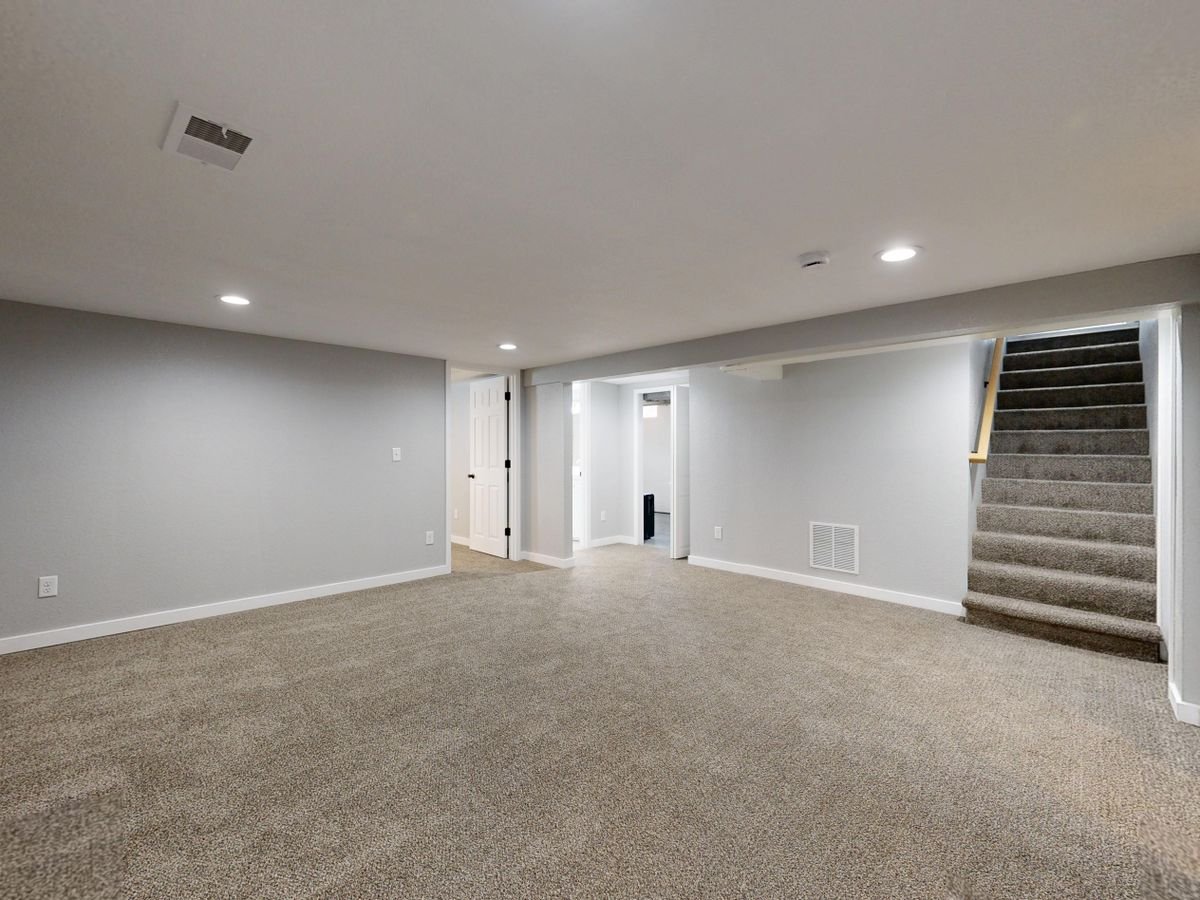
A finished basement recoups 64–70%. On the $32,000 average that is $20,500–$22,400 back, and roughly $10,000 out of pocket.
That is a middling return by renovation standards — better than a kitchen, well behind a wood deck at 94.9% or siding at about 80%. The honest framing is that a basement is not a resale play. It is the cheapest way to add usable square footage to a house you are staying in, because the roof, walls and floor already exist. Compare it to a garage conversion, which works on the same logic, and to an addition, which does not — an addition costs several times as much per square foot for the same room.
Two caveats that affect the number. Appraisers usually value below-grade square footage well under above-grade, so a finished basement rarely adds to your official square footage the way owners expect. And a basement finished without permits can become a problem at sale — the permit at $1,200–$2,000 is also insurance against a buyer’s inspector.
The bottom line
Budget $7–$23 a square foot, or about $32,000 for a typical basement. Then, before you commit to any of it, spend on three things in this order: fix the water, confirm the ceiling height, and price the egress window.
Those three decide whether you get a room people use or a room that smells. Everything after them — flooring, lighting, trim — is a preference you can adjust to fit the budget.
At $32,000 this is a job most people finance rather than pay outright; we compared five options side by side and looked specifically at home equity loans against HELOCs for projects this size.
Finishing downstairs also changes how the whole house holds heat, so it is worth checking what is above you — attic insulation cost in 2026 covers that job.
Water comes first down here, and that usually means a pump — sump pump installation cost in 2026 explains why an existing pit is worth thousands.
Before you finish a basement, find out what the walls are doing. Our guide to foundation repair costs in 2026 covers what a crack is actually telling you.
Before you finish a basement, deal with the water. Our guide to basement waterproofing costs in 2026 explains why yours was probably never waterproofed in the first place.
Working out your own number? Our free renovation cost calculator gives you the range for your size and area in about ten seconds.