The average replacement window cost $517 installed in 2026, and the average job came to $7,183 for seven windows. Those two numbers are true and almost useless, because the spread underneath them runs from about $450 a window to well past $1,200 — and the thing that moves the price most is not the brand on the sticker.
This guide breaks the number apart: what each frame material costs, what each window style costs, where the glass money goes, and the one line item — full-frame versus insert — that explains most of the difference between two quotes for the same house.
What windows cost in 2026, at a glance
| Measure | 2026 figure |
|---|---|
| Average cost per window, installed | $517 |
| Average project total | $7,183 |
| Average project size | 7 windows |
| Typical per-window range | $450 – $1,200 |
| Whole-house (10 windows), vinyl | ~$20,091 |
| Whole-house (10 windows), wood | ~$24,376 |
Notice the gap between the $517 average and the $1,200 top of the range. A quote landing at $900 a window is not automatically a rip-off, and one landing at $420 is not automatically a bargain. What matters is which of the four variables below the quote is actually pricing.
Cost by frame material
| Frame material | Cost per window installed | Realistic lifespan |
|---|---|---|
| Aluminium | $453 | 20–25 years |
| Vinyl | $472 | 20–30 years |
| Composite | $513 | 30–40 years |
| Wood | $544 | 30+ years, with upkeep |
| Fiberglass | $564 | 40–50 years |
The honest reading of that table: the entire material spread is about $111 a window. On a seven-window job that is roughly $780 — real money, but not the difference between a $6,000 quote and a $14,000 quote. Anyone telling you the material choice is the big decision is either simplifying or selling.
Aluminium is the cheapest and conducts heat, which makes it a poor choice in a cold climate unless it is thermally broken. Vinyl is the default for a reason — it is cheap, insulates well and needs nothing from you — but it cannot be painted and dark colours can warp on a south-facing wall. Fiberglass costs about $90 more per window than vinyl and lasts roughly twice as long, which is the best value in the table if you are staying put. Wood is a decision about how the house should look, and it comes with a maintenance bill.
Cost by window style
| Style | Cost per window installed |
|---|---|
| Single-hung | $474 |
| Glass block | $505 |
| Casement | $529 |
| Slider | $531 |
| Picture | $540 |
| Awning | $545 |
| Bay | $550 |
| Double-hung | $551 |
Again the spread is small — $77 from cheapest to dearest. The one swap worth knowing about is single-hung to double-hung: $77 a window buys you a second sash that tilts in, which is the difference between cleaning your upstairs windows from inside and hiring someone with a ladder. On a seven-window job that upgrade costs about $540 total. It is one of the few upsells that is straightforwardly worth it.
Bay windows are the exception to the table. The $550 figure is for the unit; a bay also needs a seat board, a roof, insulation and flashing, and that carpentry commonly adds $800–$2,500 that no per-window average captures.
Glass is where the money actually goes
| Glass package | Cost per window | Annual energy saving vs single-pane |
|---|---|---|
| Single-pane | $400 | — |
| Double-pane Low-E | $529 | $300 – $780 |
| Triple-pane | $609 | $400 – $900 |
This is the table that decides the job. Going from single-pane to double-pane Low-E costs $129 more per window and returns $300–$780 a year across the house. On a ten-window house that is $1,290 of extra glass paying back in two to four years — the best return in the whole project, by a distance.
The upgrade nobody should assume is triple-pane. It costs $80 more per window than double and, in a mild climate replacing already-double glazing, the extra saving over new double-pane Low-E is small enough that the payback runs past twenty years. Triple-pane earns its keep in genuinely cold climates, on noisy roads, and almost nowhere else.
And the case that gets oversold: replacing old double-pane with new double-pane Low-E saves $125–$340 a year. That is real, but on a $20,000 job it is a 60-year payback on energy alone. If your windows are already double-glazed and not failing, the reason to replace them is rot, operation or looks — not the utility bill. Anyone selling you that job on energy savings is doing arithmetic they hope you will not check.
Insert vs full-frame: the line item that explains your quotes
Two contractors quote the same house. One says $8,400, the other $14,900. Nine times out of ten this is why.
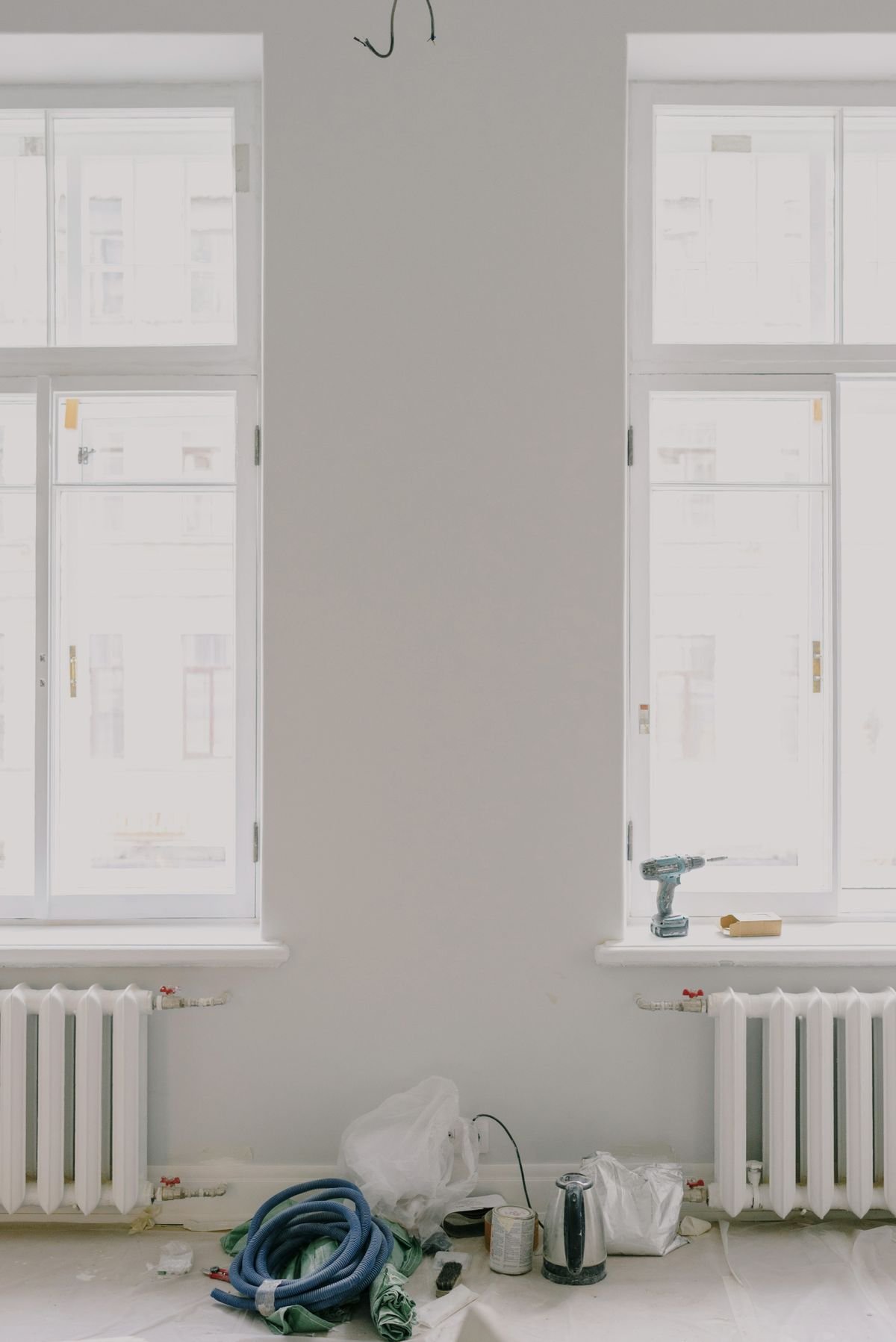
- Insert (pocket) replacement — the old sashes come out, the existing frame stays, and the new window drops into it. Fast, cheap, no damage to your siding or interior trim. It also costs you an inch or two of glass on every side, and it keeps whatever is wrong with the old frame.
- Full-frame replacement — everything comes out down to the rough opening, including the frame and sill. The installer can see and fix the sheathing, re-flash the opening properly and insulate the gap. It costs roughly 30–50% more and it is the only version that fixes water problems.
Insert is the right call on a sound frame — most houses under about thirty years old with no staining. Full-frame is not optional if the sill is soft, if there is any dark staining below the window inside or out, or if the window has ever leaked. Putting an insert into a rotten frame buries the problem behind a brand-new window, and you will meet it again in five years at three times the price.
So before you compare two prices, find the word “insert” or “full-frame” on both. If a quote does not say, that is the first question to ask — and the answer changes the number by thousands.
What is not on your quote
| Item | Typical cost | When it appears |
|---|---|---|
| Rotted sill or sheathing repair | $150 – $600 per opening | Found after the old window is out |
| Exterior capping / trim wrap | $60 – $120 per window | Full-frame jobs on wood-trimmed houses |
| Interior trim and drywall repair | $100 – $300 per window | Full-frame, almost always |
| Lead-safe work practices (pre-1978 homes) | $300 – $900 per job | Legally required, often quoted separately |
| Egress-size correction in bedrooms | $400 – $1,500 per opening | When the old window is undersized for current code |
| Permit | $50 – $400 | Most municipalities, most jobs |
| Old window disposal | $25 – $60 per window | Sometimes included, often not |
Rot is the one that turns a budget. It cannot be quoted honestly in advance because nobody can see behind the trim until the window is out — which is exactly why you want a written per-opening rate for it before work starts, rather than a number invented on the day. Ask for it. A contractor who will not put a repair rate in writing is telling you something.
Egress is the one that surprises people. If you are replacing a bedroom window, most codes require a minimum opening for escape, and an old window that was legal in 1965 often is not now. Enlarging the opening means framing work, and framing work means a header. It is not a huge cost, but it is not on the sticker either.
Does it pay back?
| Project | Average cost | Resale value added | Recouped |
|---|---|---|---|
| Vinyl windows, 10 units | $20,091 | $13,766 | 68.5% |
| Wood windows, 10 units | $24,376 | $14,912 | 61.2% |
| Midrange bathroom remodel | — | — | 64% |
| Midrange kitchen remodel | — | — | 49% |
Vinyl windows recoup 68.5% at resale — better than a bathroom, and well ahead of a kitchen. That is a genuinely good number for a comfort upgrade, and it is the honest argument for doing the job.
But read it the right way. Recouping 68.5% means you are still down $6,325 on the sale. Windows are not an investment that pays you; they are a large cost that loses less of itself than most. Where the maths actually turns positive is when you stack the energy saving on top: $300–$780 a year for ten years is $3,000–$7,800, and that is what closes the gap. Windows pay off for people who stay. They do not pay off as a pre-sale flip.
Worth comparing against the other big exterior job: siding replacement returns about 80%, the best payback in home improvement. If your siding and windows are both tired and the budget only covers one, the siding is the better financial move — and it is the one that stops the water.
How to read a window quote
- Insert or full-frame? Get this in writing on every quote before you compare a single price.
- What is the U-factor and the SHGC? These are the two numbers on the NFRC sticker that actually describe performance. “Energy efficient” is not a specification. In a cold climate you want a low U-factor; in a hot one, a low SHGC.
- Is the rot repair rate written down? Per opening, agreed in advance.
- Who handles the permit, and is it in the price?
- What exactly does the warranty cover, and for whom? Glass seal failure, frame, hardware and labour are four separate warranties with four different lengths. A “lifetime warranty” that excludes labour means you pay someone to install the free part.
- Is disposal included? Small, but it is $250–$600 on a ten-window job.
The bottom line
Budget $517 a window as your starting point and $7,183 for a typical seven-window job, then adjust: add 30–50% if any opening needs full-frame, add the glass upgrade if you are coming off single-pane, and hold back 10% for rot you cannot see yet.
The decisions that matter, in order: full-frame versus insert (thousands), glass package (hundreds, and the fastest payback in the job), then style, then material. Most sales conversations run that list backwards.
If you are working out how to pay for it, we compared five renovation financing options side by side, including the closing costs lenders leave off the phone call. And if the windows are part of a bigger envelope job, the roof replacement numbers are here.
Working out your own number? Our free renovation cost calculator gives you the range for your size and area in about ten seconds.