An asphalt roof on an average American house costs around $10,500. The same house in standing seam metal costs around $22,000.
Metal lasts 50 to 70 years. Asphalt lasts 20 to 25.
Every article about this comparison stops there, does the division, announces that metal wins on lifetime cost, and moves on. That arithmetic is correct and it is also close to useless, because it quietly assumes you will own the house for fifty years. Most people will not.
Here is the version that accounts for that.
What each costs in 2026
| Roof size | Asphalt shingle | Metal |
|---|---|---|
| 1,000 sq ft | $2,250 – $6,000 | $6,000 – $45,000 |
| 2,000 sq ft | $4,500 – $12,000 | $12,000 – $90,000 |
| 3,000 sq ft | $6,800 – $18,000 | $18,000 – $135,000 |
| Per square foot | $1.50 – $4 | $4 – $30 |
| National average | ~$10,500 | ~$22,000 |
| Lifespan | 20 – 25 years | 50 – 70 years |
Add tear-off of the old roof at $1,000 to $5,000 and permits at $150 to $500. Both apply either way, and both are commonly buried in a quote rather than itemized — ask.
Note how much wider the metal range is. That is because “metal roof” covers materials that are barely related to each other:
- Aluminum: $4 – $11 per sq ft. The practical choice, and the right one for coastal homes.
- Steel: mid-range, the most common residential metal.
- Copper: $15 – $30 per sq ft. Beautiful, essentially permanent, and the reason that $135,000 figure exists.
Asphalt has its own spread, narrower: 3-tab at $1.50–$2.50, architectural in the middle, luxury shingles at $2.50–$4.
The lifetime math, done honestly
Take a 2,000 sq ft roof over 50 years.
Asphalt: roughly $9,000 today, replaced around year 22 and again around year 44. Three roofs. Somewhere near $27,000 in today’s dollars, more once you account for material inflation, which has outpaced general inflation for a decade.
Metal: roughly $20,000 today. One roof. Possibly a repaint around year 35 for a few thousand.
Metal wins the fifty-year race by a wide margin. Nobody disputes this.
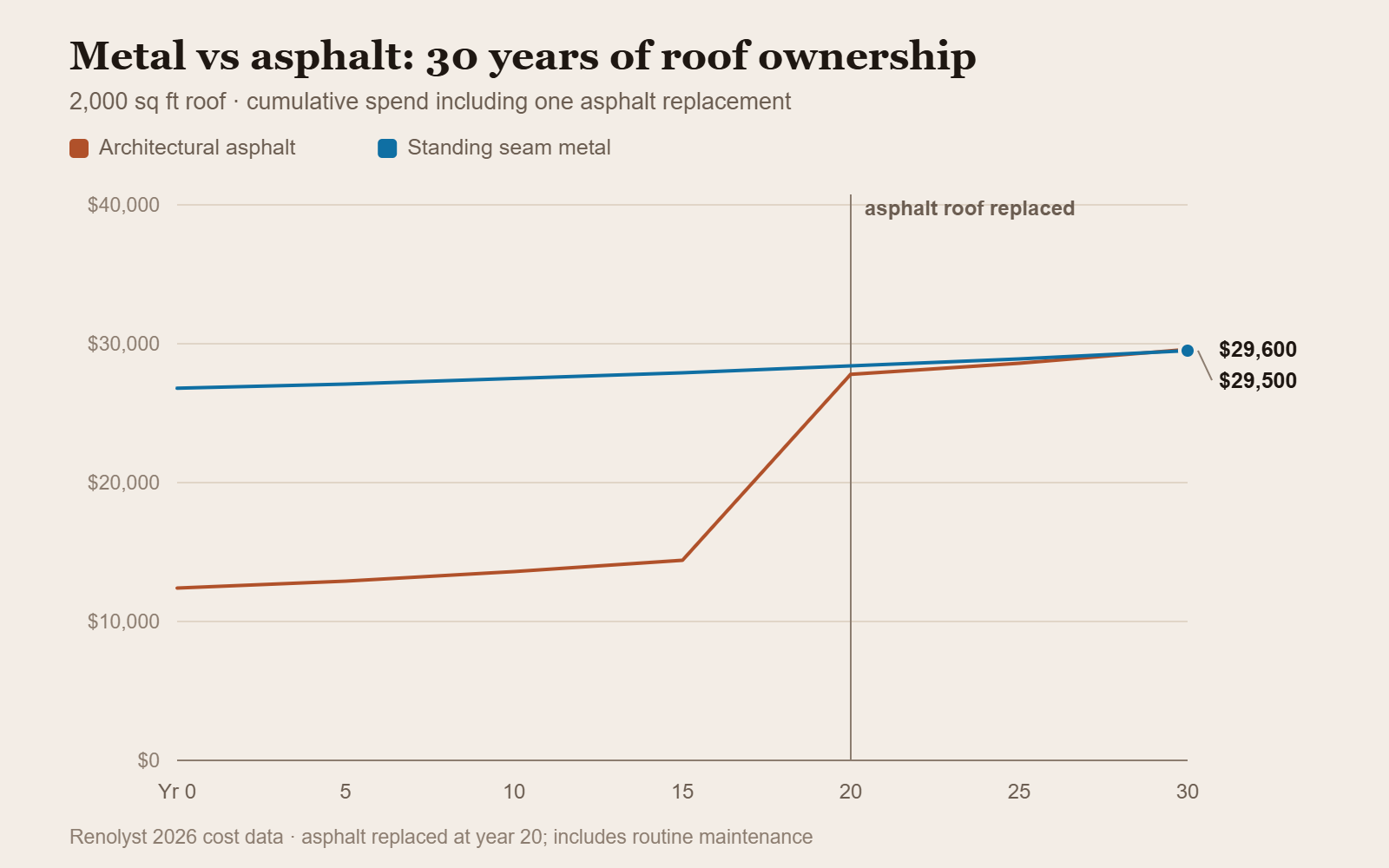
Now run it over twelve years, which is closer to how long the median American owns a home. Asphalt: $9,000, still in warranty, no further spend. Metal: $20,000, no further spend. You paid an extra $11,000 for durability you will hand to the next owner, and the appraiser will credit you for a fraction of it.
So the real question is not which roof lasts longer. It is how long you are staying.
The break-even
| Time in the home | What makes sense |
|---|---|
| Under 10 years | Asphalt, comfortably. Architectural grade, good warranty. |
| 10 – 20 years | Asphalt, unless local conditions (hail, wildfire, salt air) push you. |
| 20 – 30 years | Genuinely close. Metal starts to make sense if you can carry the upfront cost. |
| Forever home | Metal. You will only do this once. |
Three things that override the math
Hail. In hail country — Texas, Oklahoma, Colorado, Nebraska — asphalt’s 22-year lifespan is optimistic fiction. Roofs get replaced on insurance claims every eight to twelve years, and after two claims your premiums reflect it. Metal dents and keeps working. Ask your insurer about the discount before you decide; some are substantial enough to shift the whole calculation.
Wildfire. Metal is Class A fire rated. In a wildfire-urban interface zone this may affect your insurability, not merely your premium, and in some jurisdictions it is required outright.
Salt air. Within a few miles of the ocean, steel corrodes. Aluminum does not. This is one of the few places where the more expensive metal is the only metal worth buying.
Where metal underperforms its reputation
Two things get oversold.
“Metal roofs cut cooling bills.” They do, somewhat — reflective coatings cut attic heat gain meaningfully in hot climates. But the effect is much smaller than a properly ventilated and insulated attic. If you are considering metal primarily for energy savings, spend a fraction of the difference on attic insulation first and get more for it.
“Metal roofs are loud in rain.” This one is mostly obsolete. Modern residential metal is installed over solid decking and underlayment, not open purlins. It is marginally louder than asphalt and nothing like the barn roof people are picturing.
Installation quality outweighs material
Worth saying plainly: a well-installed asphalt roof outlasts a badly installed metal one, every time.
Metal is less forgiving. Panels expand and contract with temperature, so fastener choice and placement matter enormously; a crew that installs metal like it installs shingles will produce leaks at the fasteners within five years. Fewer contractors are genuinely good at metal, and the ones who are charge accordingly.
If your area has three excellent shingle crews and one metal installer with mixed reviews, that is a real argument for asphalt regardless of what the lifespan table says.
Should you DIY?
Doing it yourself saves roughly $6,300 on asphalt and $7,000 on metal.
Do not. This is not a squeamishness about heights — it is that roofing is the one trade where a subtle mistake stays invisible until it has rotted your decking, and where most manufacturer warranties are void without certified installation. You would be trading a five-figure warranty for a five-figure labor saving, and taking on the fall risk as a bonus.
Tear-off is the one piece worth negotiating. Some contractors will discount if you handle disposal.
Frequently asked questions
Can metal go over existing shingles?
Often yes, and it saves the tear-off cost. Many jurisdictions permit up to two layers total. It is not always wise — you lose the chance to inspect the decking, which is the whole point of a tear-off on an older house.
Does a metal roof add resale value?
Modestly, and less than it costs. Buyers value “roof does not need replacing” more than they value the material. A five-year-old asphalt roof and a five-year-old metal roof are worth similar amounts to most buyers, which is precisely why short-tenure owners should not overspend here.
What about solar panels?
Standing seam metal is the best roof to mount solar on — clamps attach to the seams with no roof penetrations at all. If solar is anywhere in your plans, that is a genuine point for metal. Our solar coverage goes into the current economics.
How do I know if I need a new roof or a repair?
Granules in the gutters, curling or missing shingles, daylight visible in the attic, or any active leak. Under fifteen years with localized damage, repair. Over twenty with widespread wear, replace — patching an old roof is money into an asset with a known expiry date.
When is the cheapest time to replace a roof?
Late winter and early spring, when crews are quiet. Prices climb through summer and spike after any regional storm event, when demand and out-of-town crews both surge.
Deciding
How long are you staying? Under twenty years, buy good architectural asphalt from an excellent crew and put the savings elsewhere in the house. Over twenty, or in hail or wildfire country, price metal properly — and vet the installer harder than you vet the material.
Figures reflect national US data as of August 2026 and vary substantially by region and roof complexity. Recent quote from your own project? Send it through our contact page. More in our cost guides.
Get the numbers before you get the quote
New cost guides as we publish them, and revisions when material and labour prices move. No more than one email a week.
Related guides
- Quartz vs Granite Countertops: Cost, Upkeep and Which to Buy
- Cost to Convert a Garage Into a Room in 2026
- Cost to Convert a Tub to a Walk-In Shower in 2026
Related: Roof replacement cost in 2026: real numbers by size and material
Working out your own number? Our free renovation cost calculator gives you the range for your size and area in about ten seconds.
1 thought on “Metal Roof vs Asphalt Shingles in 2026: The Honest Cost Comparison”