A French drain in your yard costs roughly $10 to $65 per linear foot in 2026. Dig it down to the footing outside the foundation and it becomes $25 to $100 per linear foot. Cut it into the basement floor and it is $40 to $100 per linear foot, which works out to $4,000 to $17,000 for a typical installed interior perimeter system according to HomeGuide, or $5,000 to $18,000 according to Angi.
Those are the numbers you came for. Here is the part most cost guides leave out.
Fixr puts the national average for a French drain at $5,000, for a 100-foot interior perimeter, with a typical range of $2,800 to $6,500. Angi puts the national average at $9,250. That is 1.85 times apart for a job described in nominally similar terms, and neither page publishes a methodology. The same pattern repeats down the entire dataset: on a 100-foot exterior run, LawnStarter says $1,000 to $6,500 while Fixr says $3,500 to $4,000, so Fixr’s floor sits three and a half times above LawnStarter’s.
And then there is lifespan. HomeGuide, Angi and Hammerio all say a properly installed French drain lasts 30 to 40 years. Fixr, on its own French drain installation page, says a well-maintained one lasts “between 3 and 40 years.” Those two claims cannot both be a product specification. One of them is describing a well-built drain and the other is describing the actual population of drains in the ground, and we think Fixr is the honest one.
All figures in this guide are as of September 2026. Every number is attributed to the source that published it. Where sources conflict we show both rather than averaging them into a comfortable middle, because the spread is the finding.
Cost per linear foot, by source
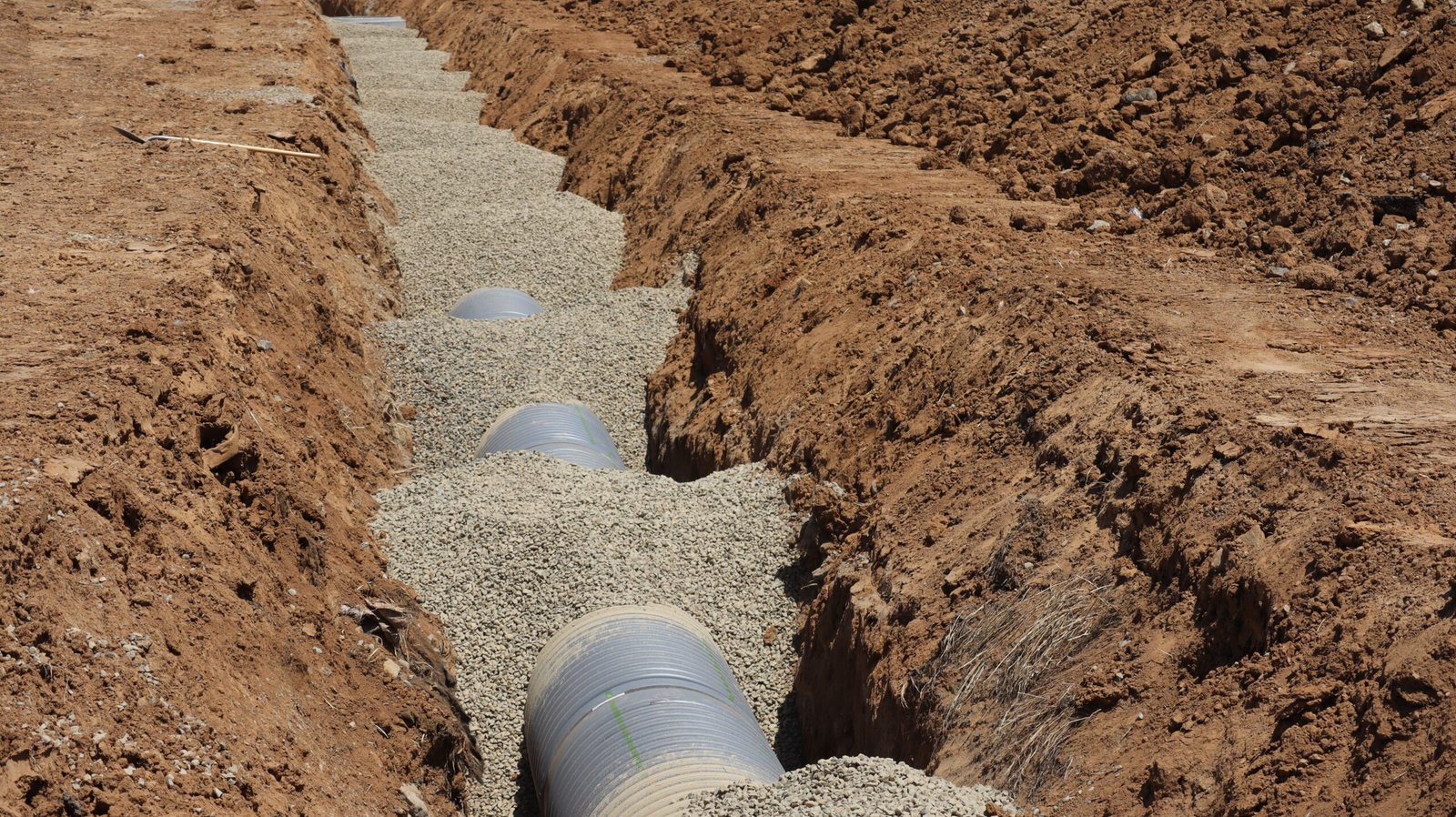
Linear foot pricing is the only unit that lets you compare quotes at all, so start here. Every source we fetched splits the market the same way: shallow yard work, deep exterior work at footing level, and interior work under the basement slab.
| Source | Exterior / yard per LF | Interior basement perimeter per LF |
|---|---|---|
| HomeGuide | $10 to $35 (surface and curtain drains); $30 to $90 at footing depth | $40 to $85 |
| Angi | $10 to $50 overall; $20 to $30 for a yard run, $50 to $80 around the house | $40 to $100 |
| Fixr | $10 to $100 overall; shallow $10 to $50; footing $80 to $100 | $40 to $100; basement specifically $60 to $70 |
| LawnStarter | $10 to $65 | $40 to $100 |
| Hammerio | Yard/surface $10 to $65; exterior foundation $25 to $95 | $40 to $100 |
| HomeGuide drainage hub | Exterior $10 to $35; shallow or curtain $10 to $30 | $40 to $85 |
| Ware Landscaping (contractor) | $20 to $40 installed | Not stated |
Read down the interior column and the sources broadly agree: $40 at the bottom, $85 to $100 at the top. Read down the exterior column and they do not. HomeGuide caps a yard drain at $35 per linear foot. Fixr, LawnStarter and Hammerio run to $65, $95 and $100. That is roughly a three-times spread at the top end of the same nominal job.
The reason is depth, not pipe. A yard drain at 18 to 36 inches, the depth range Hammerio gives, is a different excavation job from an exterior foundation drain at 4 to 8 feet down to footing level. Interior basement drains, by contrast, sit only 4 to 6 inches below the slab, but they require cutting and restoring that slab. Some sources fold yard and footing work into one “exterior” number and some separate them. When you get a quote, the first question is not how long the drain is. It is how deep.
Fixr’s per-location table
Fixr is the only source that prices a French drain by where on the property it runs. This is genuinely useful and it is also single-sourced, so treat it as one company’s framework rather than a market consensus.
| Location | Per linear foot (Fixr) |
|---|---|
| Yard | $20 to $30 |
| Crawl space | $25 to $35 |
| Patio | $25 to $40 |
| Retaining wall | $25 to $50 |
| Sidewalk | $30 to $50 |
| Deck | $35 to $45 |
| Driveway | $45 to $55 |
| Garage | $50 to $60 |
| Around the house | $50 to $80 |
| Basement | $60 to $70 |
The ordering is the interesting part. Cost climbs with what has to be cut, moved or put back: turf is cheap, concrete is not, and a drain running along a retaining wall costs more than an open yard run because of access and shoring.
How much of that is labor
Fixr is also the only source that breaks labor out of the per-foot rate. It gives a trade rate of $35 to $75 per hour, and on an interior basement drain it attributes $35 to $40 of a $50 per-linear-foot total to labor, roughly 75 percent. On an exterior drain it attributes $20 to $25 of a $35 total, roughly 65 percent. Angi and HomeGuide both quote landscaper labor higher, at $50 to $100 per hour.
The practical read: you are buying labor and excavation, not pipe. Pipe is close to a rounding error on the total, which is worth remembering when a salesperson leads with the pipe.
Total project cost, and where the 1.85x average gap comes from
| Scenario | Cost | Source |
|---|---|---|
| Exterior yard drain, whole project | $500 to $8,800 on average | HomeGuide |
| Exterior drain, whole project | $500 to $10,000 | Angi |
| Interior basement, installed | $4,000 to $17,000 | HomeGuide |
| Interior basement, installed | $5,000 to $18,000 | Angi |
| Crawl space, installed | $2,000 to $8,000 | HomeGuide |
| Curtain drain | $1,000 to $5,000 | Angi |
| Yard trench | $2,000 to $10,000 | Angi |
| Deep French drain | $2,000 to $10,000 | Angi |
| 50-foot drain | $500 to $5,000 | Angi |
| National average | $9,250; overall $500 to $18,000; pro install $400 to $27,000 | Angi |
| National average | $5,000 for a 100-foot interior perimeter; typical range $2,800 to $6,500 | Fixr |
Angi’s $9,250 and Fixr’s $5,000 are the two headline averages in this category and they are 1.85 times apart. We cannot reconcile them from what either page publishes, because neither page publishes what it averaged. Fixr at least names its basket: a 100-foot interior perimeter. Angi’s $9,250 sits inside a stated overall range of $500 to $18,000 and a professional install range of $400 to $27,000, which is a 67-times spread from floor to ceiling. An average drawn across a spread that wide is not a price. It is the mid-point of a lead-generation dataset.
Neither number should be used as a budget. Price your own job from the per-linear-foot rate for your depth class, times your length, plus the outlet, plus the ground conditions. The sections below do each of those in turn.
By length, where the two sources disagree hardest
| Length and type | LawnStarter | Fixr |
|---|---|---|
| Exterior, 50 LF | $500 to $3,250 | $1,250 to $2,000 |
| Exterior, 100 LF | $1,000 to $6,500 | $3,500 to $4,000 |
| Exterior, 150 LF | Not stated | $4,250 to $5,000 |
| Exterior, 200 LF | $2,000 to $13,000 | Not stated |
| Interior, 50 LF | $2,000 to $5,000 | $2,500 to $3,000 |
| Interior, 100 LF | $4,000 to $10,000 | $5,000 to $6,000 |
| Interior, 150 LF | Not stated | $7,500 to $9,000 |
| Interior, 200 LF | $8,000 to $20,000 | Not stated |
Look at the 100-foot exterior row. LawnStarter says $1,000 to $6,500, a range so wide it is nearly useless. Fixr says $3,500 to $4,000, a range so tight it is implausible for a job whose cost depends on what is under the turf. Fixr’s floor is three and a half times LawnStarter’s. They are the same nominal job.
What you should take from this pair is not a number. It is that published length-based pricing carries no information about your site, and your site is most of the cost.
Converting basement square footage to linear feet
Hammerio publishes the one conversion homeowners actually need, from basement floor area to perimeter linear feet, because you know your square footage and you do not know your perimeter.
| Basement size | Approx. perimeter | Interior perimeter drain cost |
|---|---|---|
| 800 sq ft | About 115 LF | $4,600 to $11,500 |
| 1,000 sq ft | About 130 LF | $5,200 to $13,000 |
| 1,200 sq ft | About 145 LF | $5,800 to $14,500 |
| 1,500 sq ft | About 160 LF | $6,400 to $16,000 |
| Partial, two walls | 60 to 80 LF | $2,400 to $8,000 |
Note that Hammerio’s own “most homeowners pay $3,000 to $8,000” line sits below the bottom of its own 1,000 sq ft row. That is an internal inconsistency on a single page, and it most likely reflects partial systems being more common than full perimeter ones. If a contractor quotes you a full perimeter, ask whether you need a full perimeter.
The outlet swings the cost more than the length does
This is the most under-reported line in French drain pricing and the one we would most like you to remember. A French drain has to put the water somewhere. Where it can put the water is decided by your topography, and the cost difference between the three options is larger than the difference between a 50-foot drain and a 150-foot drain.
| Outlet type | Added cost | What it requires |
|---|---|---|
| Daylight discharge | Free | Enough fall on the lot to carry water by gravity to a lower point on your own property |
| Dry well | $1,000 to $3,000 | Permeable soil that can actually absorb the discharge |
| Storm sewer connection | $500 to $2,000, plus permit and inspection fees | A legal connection point and municipal permission |
Read that as a topography tax. Two identical 100-foot drains, same pipe, same stone, same crew, can differ by up to $3,000 before anyone picks up a shovel, purely because one lot falls away and the other is flat. Most homeowners assume drain length is the driver of an exterior quote. On a flat lot it usually is not.
The dry well figure is itself contested. Hammerio says $1,000 to $3,000. HomeGuide says $50 to $3,000 or more depending on whether you are installing loose stone, a plastic tank or a concrete tank, and separately prices plastic at $50 to $700 and concrete at $500 to $3,000-plus. LawnStarter says $500 to $3,000. Fixr says $1,500 to $5,000, a floor thirty times HomeGuide’s. The honest summary is that “dry well” describes three different products at three different price points, and any quote should name which one you are getting.
| Outlet or dry well item | Cost | Source |
|---|---|---|
| Dry well, varies by material | $50 to $3,000+ | HomeGuide (French drain page) |
| Dry well, plastic | $50 to $700 | HomeGuide (drainage hub) |
| Dry well, concrete | $500 to $3,000+ | HomeGuide (drainage hub) |
| Dry well | $500 to $3,000 | LawnStarter |
| Dry well | $1,500 to $5,000 | Fixr |
| Storm drain | $500 to $3,500 | LawnStarter |
| Catch basin, installed | $150 to $450 each | Ware Landscaping |
| Catch basin system | $2,500 to $5,000 | Fixr |
One placement spec is worth holding onto, because it decides whether daylight discharge is even available to you. High Flow Drainage Solutions specifies discharge “at least 25 feet from the house, downhill from the collection points.” If you do not have 25 feet of downhill on your own land, you are in dry well or storm sewer territory, and you should price the job that way before you fall in love with a per-foot rate.
Ground conditions: the other thing that blows up a quote
After the outlet, the dig itself is where two identical-looking quotes diverge. HomeGuide’s excavation pricing shows why.
| Excavation item | Cost | Source |
|---|---|---|
| Light soil | $2.50 to $6.00 per cubic yard | HomeGuide |
| Average soil | $6.00 to $10.00 per cubic yard | HomeGuide |
| Heavy or wet soil, loose rock | $10.00 to $15.00 per cubic yard | HomeGuide |
| Jackhammered rock | $50 to $200+ per cubic yard | HomeGuide |
| Boulder removal, stored on site | $50 to $200 per cubic yard | HomeGuide |
| Boulder removal, hauled away | $220 to $250 per cubic yard | HomeGuide |
| Trenching | $5 to $12 per linear foot | HomeGuide |
| 100-foot trench | $500 to $1,200 | HomeGuide (French drain page) |
| Dirt removal and haul-off | $140 to $230 per cubic yard | HomeGuide |
| Fill dirt delivery | $5 to $25 per cubic yard | HomeGuide |
| Operator with equipment | $100 to $300 per hour | HomeGuide |
| Operator only | $50 to $150 per hour | HomeGuide |
| Mini excavator rental | $200 to $700 per day | HomeGuide |
| Excavation for exterior basement waterproofing | $50 to $200 per cubic yard | This Old House |
| Soil work, hourly line item | $50 to $100 per hour | Angi |
Put rock at $50 to $200-plus per cubic yard next to average soil at $6 to $10 per cubic yard and you get a five-fold to thirty-fold multiplier on the digging itself. That arithmetic is ours, on HomeGuide’s two published figures, but it explains something no cost table can: why two “identical” 100-foot French drain quotes can differ by five figures. Nobody is necessarily lying. One crew hit rock.
Soil type matters short of rock, too. Hammerio notes that dense clay means excavators cannot simply hand-dig, so machine time increases, while sandy soil reduces labor. LawnStarter says shale and clay soils are difficult to dig through, and that accessibility determines whether a machine can be used at all. If your yard is gated, narrow or terraced, you are paying for hand work.
Tree roots: a failure mode nobody prices
We looked for a dollar figure for cutting roots out of a drain trench and could not find one. HomeGuide’s excavation page does not price tree root removal or hard soil as separate line items. What the sources do document is roots as a failure mechanism after the fact. French Drain Man argues that stone placed under a PVC pipe creates standing water that “invites tree roots to sniff out the water.” A GreenBuildingAdvisor thread reports dug-up corrugated pipe that was either crushed or had roots and debris in it or both. Roots are a design risk here, not a budget line, and we are not going to invent a price for one.
The pipe argument: three credible answers, no winner
If you read enough drainage content you will be told confidently which pipe to use. You will be told this three different ways by three different people who install drains for a living. This is the most interesting unresolved question in the category, and we are not going to pretend it is settled.
Position one: corrugated, because PVC clogs
French Drain Man, a contractor, argues that perforated PVC has “only holes pointing down,” effectively three holes along the bottom, while corrugated pipe has holes 360 degrees all the way around. The argument runs that once PVC gets sediment in it, the bottom hole plugs, flow shifts to the two side holes, velocity drops and the pipe stops self-flushing. The 360-degree perforation on corrugated, by this account, lets a heavy rain flush sediment out, and removes the need for support stone under the pipe. The recommended wrap is a 4 to 8 ounce non-woven geotextile filter fabric that is double punched. The supporting anecdote is a community PVC system that failed, in this contractor’s telling, after exactly two years.
Position two: rigid PVC, because corrugated crushes and roots get in
On the GreenBuildingAdvisor expert forum, editor Malcolm Taylor favors rigid PVC for durability, consistent slope and root resistance. The counter-argument to corrugated there is that flexible pipe is infiltrated by roots just as easily, does not hold slope over a long run, and comes out of the ground crushed. Semi-flexible HDPE triple-wall is offered on the same thread as an acceptable and cheaper middle option.
Position three: neither, use single-wall perforated HDPE
High Flow Drainage Solutions recommends single-wall perforated HDPE over both, on the basis that cheap corrugated gets squished and collapses easily, and that HDPE is preferable to PVC in clay soils because it stays flexible in the cold.
| Position | Recommended pipe | Core argument | Stated failure mode of the alternatives |
|---|---|---|---|
| French Drain Man (contractor) | Corrugated, 360-degree perforated | Self-flushes sediment in heavy rain; needs no support stone | PVC plugs once sediment enters; stone bed under PVC creates standing water that draws roots |
| GreenBuildingAdvisor (Malcolm Taylor, editor) | Rigid PVC | Durability, consistent slope, root resistance | Corrugated is root-infiltrated, loses slope, and comes out crushed |
| High Flow Drainage Solutions | Single-wall perforated HDPE | Cold-weather flexibility; better than PVC in clay soils | Cheap corrugated squishes and collapses |
We are not picking a winner, because the evidence does not support picking one. All three positions come from people who dig these things up and look at them, all three cite real failure modes, and none is backed by a controlled comparison. What you can take from the disagreement is more useful than a verdict anyway: anyone who tells you the pipe question is settled is selling you their answer to it. Ask a contractor which pipe they use and why, and listen for whether the reasoning matches your soil, your slope length and your tree cover. That is the variable the three positions actually disagree about.
One thing all three effectively agree on is fabric. GreenBuildingAdvisor describes the “burrito method” as superior to a pipe sock: fabric laid in the trench bottom, then gravel, then pipe, then gravel, then the fabric wrapped over the whole thing. The stated reason is that it keeps silt out of the gravel rather than just out of the pipe. High Flow specifies non-woven geotextile, preferably 4 ounce, and warns explicitly against impermeable weed fabric. French Drain Man specifies 4 to 8 ounce non-woven, double punched. Three people who cannot agree on pipe agree on this.
Materials, and a 10x gap that is not really a conflict
| Material | Cost | Source |
|---|---|---|
| Drainage pipe, general | $1 to $5+ per LF | HomeGuide |
| Piping materials | $0.50 to $3 per LF | LawnStarter |
| Perforated pipe, 2 inch | $0.70 to $1 per LF | Fixr |
| Perforated pipe, 3 inch | $0.75 to $1.20 per LF | Fixr |
| Perforated pipe, 4 inch | $1 to $1.50 per LF | Fixr |
| Perforated pipe, 6 inch | $1.80 to $2.20 per LF | Fixr |
| Perforated pipe, 8 inch | $2.30 to $3 per LF | Fixr |
| Thin-wall triplewall | $6 to $10 per LF | Ware Landscaping |
| SDR-35 PVC | $10 to $18 per LF | Ware Landscaping |
| Schedule 40 PVC, heavy duty | $15 to $25 per LF | Ware Landscaping |
| Pipe sleeves (socks) | $0.25 to $0.70 per foot | HomeGuide |
| Prefabricated drain | About $50 per 10-foot section | Fixr |
| Hydroblox, pipeless alternative | $1 per foot installed | Fixr |
| Gravel in a French drain | $1 to $3 per foot | HomeGuide |
| Gravel, general | $10 to $50 per ton; $15 to $75 per cubic yard | HomeGuide |
| Pea gravel | $28 per ton at 24 tons or more, $45 per ton in smaller quantities | HomeGuide |
| Pea gravel | $25 to $53 per ton | LawnStarter |
| Gravel delivery | $10 to $25 per ton, free with a 5-ton minimum up to 5 miles, plus $10 per extra mile | HomeGuide |
| Filter fabric | $0.40 to $1.80+ per foot | HomeGuide |
| Filter fabric | $0.45 to $0.80 per sq ft | LawnStarter |
The pipe rows look like a ten-times conflict and they are not. Fixr prices 4-inch perforated pipe at $1 to $1.50 per linear foot; Ware Landscaping, a contractor, prices SDR-35 PVC at $10 to $18 per linear foot. Fixr is quoting materials only and Ware appears to be quoting installed rates. We are flagging that rather than averaging the two, because the average would describe nothing that exists.
Two specification notes from High Flow Drainage Solutions are worth more than the prices: at least 6 inches of gravel, pipe placed at the bottom of the trench directly on the fabric, and gravel stopped 4 to 6 inches below the surface.
One sourcing gap we want to be upfront about: we could not price #57 stone or “washed drainage stone” as a distinct product category. HomeGuide’s gravel page covers crusher run, limestone, river rock and pea gravel and does not break out #57 on the page we fetched. This matters, because #57 washed stone is what drain specifications typically call for, and pea gravel, the product most readily priced above, is generally not the right material for a French drain. Do not budget a French drain from a pea gravel price.
French drain versus curtain drain versus trench drain
These three get used interchangeably in quotes and they are not the same product.
| Type | What it does | Per LF | Project total |
|---|---|---|---|
| French drain | Perforated pipe underground, buried in stone, redirecting water away from the foundation | $10 to $100 depending on depth | $500 to $8,800 exterior; $4,000 to $17,000 interior (HomeGuide) |
| Curtain drain | Shallow trench with gravel and waterproof fabric near the surface; intercepts surface runoff from slopes before it reaches the house. Best on sloped terrain and clay soil | $10 to $25 (Angi) | $1,000 to $4,000 (Angi and HomeGuide); $1,000 to $2,500 (Fixr) |
| Trench or channel drain | Above-ground channel with a grated cover, typically at patios, pools and driveways; surface interception on hardscape rather than subsurface groundwater | $30 to $150 (Angi and HomeGuide) | $3,000 to $15,000 (Fixr); $400 to $1,200 for a one-car driveway, $800 to $2,400 for a two-car (HomeGuide) |
Angi frames the durability gap starkly, saying French drains last “30-40 years with proper maintenance” while trench drains can fail in as little as 2 to 5 years and demand regular cleaning to prevent debris accumulation, bacterial growth and contamination. Be careful with that framing. It comes from Angi’s own page comparing the two, it is a single source, and the 2-to-5-year trench drain figure has no independent corroboration we could find. It also sits awkwardly against Fixr’s 3-to-40-year range for French drains.
The other yard drainage benchmarks from HomeGuide’s drainage hub round out the picture: a yard drainage system at $8 to $15 per linear foot, a catch basin or storm drain at $8 to $15, underground downspouts at $15 to $35, and a swale or irrigation ditch at $5 to $15. The swale is the cheapest linear foot of drainage anywhere in this dataset.
Sump pumps and backup power
An interior perimeter drain usually needs somewhere to pump to, which means a sump. The add-on pricing here is reasonably consistent by the standards of this category.
| Item | Cost | Source |
|---|---|---|
| Add a sump pump to a French drain | $600 to $2,500 | HomeGuide |
| Sump pump including installation | $500 to $1,800 | HomeGuide |
| Sump pump installation | $500 to $2,000 | Angi |
| Sump pump | $700 to $1,600 | Fixr |
| Professional install with pit excavation and electrical connections | $1,200 to $2,500 | This Old House |
| Sump pump system | $625 to $2,625 | Hammerio |
| Combined sump pump plus drain | $65 to $75 per linear foot | Fixr |
| Battery backup, installed | $600 to $2,000+ | HomeGuide |
| Water-powered backup, installed | $300 to $1,000 | HomeGuide |
| Combo backup system, installed | $1,000 to $3,000 | HomeGuide |
| Backup unit only | $250 to $600 | HomeGuide |
| Battery alone | $100 to $400 | HomeGuide |
| Backup install labor, 2 to 4+ hours | $150 to $600+ | HomeGuide |
| Permits and inspections | $50 to $200 | HomeGuide |
| Annual sump pump maintenance | $100 to $250 | HomeGuide |
There is one conflict to flag. Hammerio says a battery backup adds $200 to $500. HomeGuide’s dedicated battery backup page says $600 to $2,000-plus installed. Hammerio is almost certainly quoting hardware only. Use the installed figure when you budget.
The buried finding on that page is the water-powered backup at $300 to $1,000 installed, roughly a third to a half of the battery option, with no battery to replace on a cycle. HomeGuide prices battery replacement at $100 to $200 every 3 to 5 years for flooded deep-cycle, and $200 to $400 every 4 to 7 years for AGM or gel cell. A water-powered unit avoids that cycle entirely. The standard caveat is that it needs municipal water pressure, so homes on a well are out. We could not verify that limitation from any page we fetched, so treat it as a question to ask your plumber rather than a fact we are asserting.
On runtime, HomeGuide states that a 40 amp-hour battery can run up to 53 hours if the pump runs once every five minutes. On service life, HomeGuide says systems with a sump pump typically need service within 10 years, while Hammerio puts motor replacement at every 7 to 10 years. Whichever figure you use, a sump is a recurring cost attached to a one-time drain, and a drain that discharges by gravity does not have one.
DIY versus hiring it out
Hammerio publishes the cleanest apples-to-apples comparison we found, for a 100-foot yard drain.
| Component | DIY | Professional |
|---|---|---|
| Trencher rental | $200 to $300 | Included |
| Materials: pipe, fabric, stone, cap | $185 to $435 | Included |
| Labor | 8 to 16 hours of your own time | $800 to $5,000 |
| Total | $385 to $735 | $1,000 to $6,500 |
LawnStarter builds its DIY estimate from a different parts list: pea gravel at $25 to $53 per ton, trencher rental at $85 per day, landscape fabric at $0.45 to $0.80 per square foot, pre-perforated PVC pipe at $12, fittings at $7, a trench drain at $18 per metre and a shovel at $20, for a total DIY estimate of approximately $700. Note the trencher rental conflict inside those two lists: LawnStarter’s $85 per day against Hammerio’s $200 to $300. That is most likely a walk-behind versus a ride-on machine, and the two figures should not be averaged.
So DIY saves roughly $600 to $5,800 on a 100-foot yard drain, and the yard case is genuinely DIY-able. The interior case is not, and the saving there is largely illusory, because as Hammerio puts it, interior basement drains require concrete cutting and slab restoration, and incorrect slope or undersized sump pits worsen water problems. Angi similarly calls curtain drains easier to install and French drains more complex, with professional installation recommended.
StructureSmart’s go / no-go list
StructureSmart publishes the most useful DIY screening criteria we found anywhere in this research.
- Works as DIY: surface diversions under 30 feet, supplemental landscape drainage for nuisance standing water, and downspout extensions running to a distant outlet.
- Prerequisites: a minimum 1 percent grade, which is 1 inch of drop per 8 feet; known water table depth; a legal discharge point on your own property; no utility conflicts, so call 811; and no permit requirement.
- Deal-breakers: a seasonal high water table at or above trench depth, in which case “the French drain will fill with groundwater”; no viable legal discharge point; any work within 10 feet of a foundation; permit or regulatory exposure, where violations can result in removal orders at the homeowner’s expense; and complex drainage areas where an undersized system overflows during heavy rain, which is exactly when you need it to work.
StructureSmart also notes that professional permit-ready drainage plans start at $2,500. That is a real number to weigh against a $700 DIY parts list whenever the job is anywhere near a foundation.
Two build specs decide whether a DIY drain works at all. High Flow specifies about 1 inch of drop every 8 to 10 feet, which is 1 percent, and says to use a laser level because eyeballing results in poor drainage or backward water flow. GreenBuildingAdvisor warns against backfilling with excavated clay, reporting a job where much of the work had to be redone for that reason, and recommends free-draining soil instead.
The pattern across every documented failure is the same: the expensive mistakes are design decisions, not workmanship. Grade, water table, outlet legality. Those cost nothing to get right and everything to get wrong.
Permits, and where the water is legally allowed to go
| Source | Permit | Inspection |
|---|---|---|
| HomeGuide | $100 to $375 or more for storm drain connections | Not stated |
| Angi | $50 to $200, one-time | $100 to $300 |
| Fixr | $50 to $100 | $150 to $250 |
| Hammerio | $75 to $250 where required | Not stated |
On when you need one, Hammerio is direct: interior basement drains almost always need permits, exterior foundation drains frequently do, and yard drains are less regulated. LegalClarity adds the general rule that French drains are legal nationwide but most municipalities require permits based on excavation size, depth or connection to public systems, and that requirements vary significantly by jurisdiction. Call your building or planning department before you start.
The penalties for skipping a permit are not trivial. LegalClarity lists stop-work orders, fines up to $500 daily, complete removal requirements, property liens that prevent sale or refinancing, and insurance claim denials. That last one is the expensive one, because the reason you built the drain is the claim you are most likely to file.
Discharging toward a neighbor
The direct answer, from LegalClarity: you cannot legally direct concentrated water onto neighboring property, and acceptable discharge means your own yard, natural drainage channels, or municipal storm drains with permission. FindLaw notes the same rule runs the other way, so neighbors generally cannot intentionally drain water onto your property either, including by directing downspouts or installing drainage systems toward adjacent properties.
Underneath that sit three competing state doctrines. Both of our legal sources agree on the taxonomy.
| Doctrine | What it holds | The test that gets applied |
|---|---|---|
| Reasonable Use Rule | FindLaw describes this as the doctrine the majority of states follow, and LegalClarity corroborates it as the most common. Alterations are allowed unless unreasonable | Courts weigh necessity, the extent of harm, and whether less harmful alternatives existed |
| Common Enemy Rule | Landowners may take whatever steps they wish, such as building dikes or water drainage ditches, to repel surface water | Most states have modified it to impose liability where neighbors act negligently |
| Civil Law Rule, or natural flow | Imposes liability on any landowner who changes their land in a way that diverts the natural flow of surface water | Lower land must accept natural flow; upper land cannot artificially increase it. Most adopting states have modified it |
Here is the part we will not do. No source we fetched verified which states follow which doctrine. Neither FindLaw nor LegalClarity named individual states, so we are not publishing a state-by-state table. You will find such tables elsewhere; it is worth asking what they are sourced to, because we could not source one.
The operative distinction across all three doctrines is the same, and FindLaw states it plainly: natural water flow versus artificial water flow created by man-made alteration. So the honest line is this. A French drain outlet aimed at your property line is a legal problem in every state. Only the test the court applies changes. If your discharge point is anywhere near a boundary, that is a conversation with a local attorney or your building department, not with a cost guide.
Separately, your HOA can impose its own approval on top of the municipality. LegalClarity notes that violations may result in fines, removal demands or property liens, and that visible trenching often triggers architectural review. Check your CC&Rs before the excavator arrives.
Lifespan: 30 to 40 years, or 3 to 40?
| Claim | Source |
|---|---|
| “Most French drains last 30 to 40+ years when installed correctly” | HomeGuide |
| “30-40 years with proper maintenance” | Angi, French vs trench drain page |
| “Properly installed systems last 30–40 years” | Hammerio |
| “10 to 40 years” | Angi, curtain vs French drain page |
| “between 3 and 40 years if well maintained” | Fixr |
| Systems without filter fabric in clay or silty soils may clog in 10 to 15 years | Hammerio |
| Systems with a sump pump typically need service within 10 years | HomeGuide |
The industry line is 30 to 40 years. Fixr’s own page says 3 to 40. Those are irreconcilable as product specifications, and the 3-year floor is not an outlier. French Drain Man’s case study describes a PVC system that failed at exactly two years. Angi’s own trench drain figure is a 2-to-5-year failure window. Hammerio’s note that a drain without filter fabric in clay may clog in 10 to 15 years points the same way.
The most defensible statement in this whole dataset is that a French drain’s lifespan is an installation-quality variable, not a product specification. The 30-to-40-year figure describes what a correctly built drain can do. It does not describe what the drains in the ground are actually doing. When a contractor quotes you 30 to 40 years, that is a claim about their own workmanship, and it is fair to ask what warranty stands behind it.
Maintenance and repair
| Item | Cost | Source |
|---|---|---|
| Cleaning and maintenance | $80 to $500+ | HomeGuide |
| Professional cleaning | $75 to $500 average; $45 to $150 per hour | Fixr |
| Replacement, pipe only | $1,000 to $2,500 | Fixr |
| Replacement, full retrenching | $2,000 to $8,000 | Fixr |
| Landscaping repair after install | $100 to $200 | Angi |
| Decorative covering | $600 to $1,400 | LawnStarter |
| Sump pump annual maintenance | $100 to $250 | HomeGuide |
Angi describes curtain drains as needing minimal maintenance and French drains as requiring annual maintenance. No source we fetched published a lifetime cost of ownership or an annual cost per year of service, so we cannot give you one. What the repair figures do tell you is that a failed drain is not a cheap fix: $2,000 to $8,000 to retrench is close to the cost of the original exterior job.
Do the cheap fixes first, even though that argues you out of the big job
This is the section we would want read to us before signing a drainage contract. A French drain manages water after it has arrived. Two much cheaper interventions change where the water comes from, and they should be exhausted first.
| Intervention | Cost | What it actually does | Source |
|---|---|---|---|
| Buried downspout extensions | $150 to $350 per downspout | Moves roof water, the largest single volume hitting most foundations, away from the four or five points where it lands | HomeGuide |
| Underground downspouts, per LF | $15 to $35 | The same fix, priced by run length | HomeGuide |
| Buried downspout extensions, contractor installed | $8 to $15 per LF; $2,500 to $8,000 for a full system on a 2,000 sq ft home | Contractor-quoted installed rate | Ware Landscaping |
| Yard regrading | $500 to $3,000 | Fixes negative slope, which is the cause rather than the symptom | HomeGuide |
| Drainage swale | $250 to $1,000; $5 to $15 per LF | Cheapest per linear foot of any option in the dataset | HomeGuide |
| Swale | $450 to $2,000 | The same, priced by a different source | Fixr |
| Curtain drain | $1,000 to $4,000; $10 to $25 per LF | Intercepts uphill runoff before it reaches the house | Angi and HomeGuide |
| Rain garden | $1,000 to $3,000 | Absorbs runoff on site | Fixr |
| Exterior French drain | $500 to $8,800; $10 to $65 per LF | Moves subsurface water away from the foundation | HomeGuide |
| Interior perimeter drain plus sump | $4,000 to $17,000; $40 to $100 per LF | Collects water that has already reached the foundation and pumps it back out | HomeGuide |
| Exterior excavation plus membrane waterproofing | Averages $7,000; range $7,000 to $15,000; with French drains and membrane, “closer to $20,000 or more” | The most thorough and most expensive option | This Old House |
The arithmetic is hard to argue with. Four buried downspout extensions at $150 to $350 each is $600 to $1,400. Regrading is $500 to $3,000. Together that is under $4,400 at the top end, against $4,000 to $17,000 for an interior perimeter drain. Roof water arrives at your foundation in enormous volume at four or five discrete, cheap-to-fix points, and negative slope around the house delivers most of the rest. If neither has been addressed, an interior drain is being asked to manage a problem nobody has tried to turn off.
We are aware this argues you out of the expensive job, and that most pages in this category do the opposite. It is still the honest advice. Do the cheap work, get through one wet season, and then decide whether you still have a problem.
Where the other basement options sit
| Option | Cost | Source |
|---|---|---|
| Interior waterproof paint or coating | $1 to $8 per sq ft; interior methods average $3,000 | This Old House |
| Vapor barrier, full coverage | $1,500 to $3,000 | This Old House |
| Interior drainage systems | $2,000 to $6,000 | This Old House |
| Subfloor drain tile | $25 to $55 per LF | This Old House |
| Weeping tile drainage system | $60 to $120 per LF | This Old House |
| Exterior weeping tile, per house side | $1,500 to $4,000 | HomeGuide |
| Crack injection | $800 to $1,500 per crack | This Old House |
| Sub-surface yard drainage system | $1,200 to $8,000 | HomeGuide |
| Basement waterproofing total, 1,000 sq ft | Low $12,447 / average $13,640 / high $14,833 | This Old House |
Interior coatings look cheap here, at $1 to $8 per square foot and roughly $3,000 average for interior methods, set against a $4,000 to $17,000 interior drain. Be careful with that comparison. A coating manages vapor and minor seepage; it does not move water. No source we fetched published a failure rate for coatings under hydrostatic pressure, so we are not going to assert one as a number. We will assert it as a mechanism: if water is being pushed through your wall by pressure, a coating is not the thing that stops it.
If water has already been sitting in a basement or crawl space, price the consequences alongside the drain. Our guides on mold remediation costs and crawl space encapsulation cover the work that often follows a water problem.
Every conflict in one table
| Item | Low source | High source | Spread |
|---|---|---|---|
| Exterior French drain per LF | HomeGuide $10 to $35 | Fixr, LawnStarter and Hammerio up to $65 to $100 | About 3x at the top |
| Interior French drain per LF | HomeGuide $40 to $85 | Angi, Fixr, LawnStarter and Hammerio $40 to $100 | Modest |
| 100 LF exterior total | LawnStarter $1,000 to $6,500 | Fixr $3,500 to $4,000 | Fixr’s floor is 3.5x LawnStarter’s |
| National average | Fixr $5,000 | Angi $9,250 | 1.85x |
| Lifespan | Fixr, 3 to 40 years | HomeGuide, 30 to 40+ years | Irreconcilable |
| Battery backup add-on | Hammerio $200 to $500 | HomeGuide $600 to $2,000+ installed | Likely hardware versus installed |
| Trencher rental | LawnStarter $85 per day | Hammerio $200 to $300 | Likely walk-behind versus ride-on |
| Permits | Fixr $50 to $100 | HomeGuide $100 to $375+ | 3x to 7x |
| Dry well | HomeGuide $50 to $3,000+ | Fixr $1,500 to $5,000 | Fixr’s floor is 30x HomeGuide’s |
| Pipe type | French Drain Man: corrugated, PVC clogs in two years | GreenBuildingAdvisor: PVC, corrugated crushes and roots get in | Direct contradiction |
A note on what all of these sources are. With the exception of the contractor pages, they are lead-generation cost aggregators, not primary contractor data, and none of them published a methodology on the pages we fetched. Treat the spread as the finding, not any single midpoint. If you want more comparisons assembled under the same rules, our cost guides all work this way.
What we could not verify
These are the things a French drain cost guide is expected to tell you that we could not source. We would rather list them than invent them.
- Which states follow which surface water doctrine. Neither FindLaw nor LegalClarity named individual states. No state table appears in this guide for that reason.
- A dollar figure for tree root removal inside a drain trench. Documented as a failure mechanism by several sources, priced by none of them.
- #57 stone or washed drainage stone pricing as a distinct product category. The gravel pricing available covers crusher run, limestone, river rock and pea gravel, and pea gravel is generally not the right product here.
- Independent corroboration of the trench drain 2-to-5-year failure claim. It appears on one Angi page that is comparing trench drains unfavorably with French drains.
- That well-water homes cannot use water-powered sump backups. The mechanism is standard, but no page we fetched stated it, so we flag it rather than assert it.
- Any lifetime cost of ownership or cost-per-year-of-service figure. No source publishes one.
- Any failure-rate data for interior waterproofing coatings under hydrostatic pressure. We can describe the mechanism; we cannot give you a number.
- Regional or state cost multipliers for French drains specifically. Present for many renovation categories, absent for this one.
- Any published methodology from the major cost aggregators. None of the pages we fetched explained what was averaged, across how many jobs, in which markets.
The verdict
Five things to take from this.
Price the depth class, not the drain. A yard drain at $10 to $65 per linear foot, an exterior footing drain at $25 to $100, and an interior perimeter drain at $40 to $100 are three different jobs wearing one name. The first question on any quote is how deep the trench goes, because that is what moves the number.
Ask about the outlet before you ask about the length. Daylight discharge is free, a dry well adds $1,000 to $3,000, and a storm sewer tie-in adds $500 to $2,000 plus permits. On a flat lot, topography swings the price more than an extra 50 feet of trench does. If a quote does not say where the water goes, it is not a complete quote.
Do not accept a settled answer on pipe. Three credible sources give three contradictory recommendations, corrugated, rigid PVC and single-wall HDPE, each with a documented failure mode for the others. The trade has not resolved this, and we are not going to resolve it for them. What you can insist on is fabric done properly, the burrito wrap rather than a sock alone, non-woven and 4 ounce or heavier, because that is the one thing all three positions agree on.
Treat 30 to 40 years as a claim about workmanship, not a spec. Fixr’s own page says 3 to 40 years, and a two-year failure is documented. Slope, water table, outlet and fabric decide which end of that range you land on, and all four are settled before anyone digs.
Spend $600 to $4,400 before you spend $17,000. Buried downspout extensions at $150 to $350 each and regrading at $500 to $3,000 address where the water comes from. An interior perimeter drain at $4,000 to $17,000 addresses where it ends up. Do the first two, watch through a wet season, then decide. If the drainage contractor you are talking to does not raise downspouts and grade unprompted, get a second quote from one who does.