Chimney repair is one of the few renovation jobs where the quote you get depends less on materials than on how far off the ground the work is. HomeGuide puts minor repairs at $200 to $850 and more extensive work at $500 to $7,000, with a full rebuild running $4,000 to $15,000. Angi says simple repairs average $455. Those are not really the same measurement, and the gap between them is mostly access.
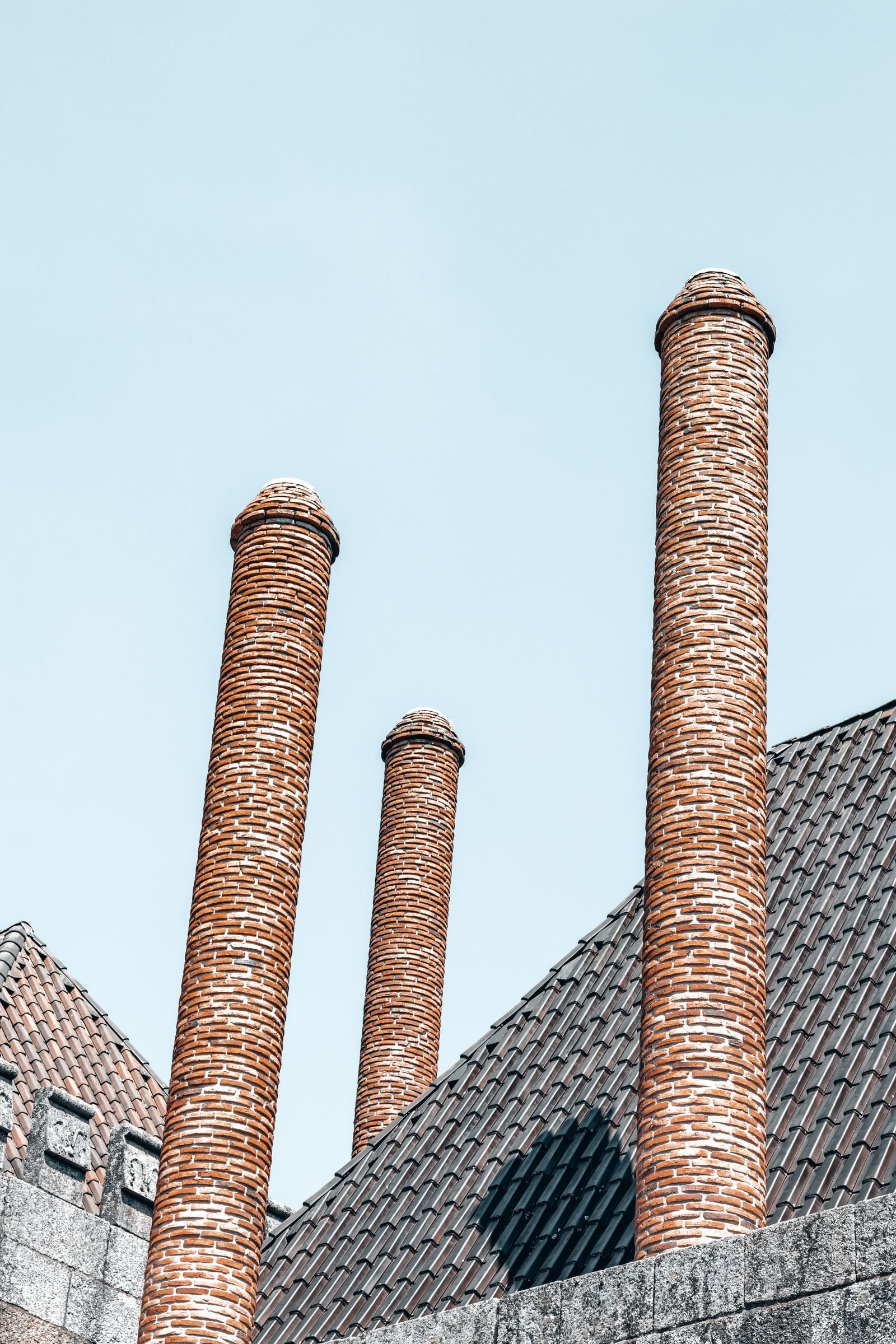
Labour is nearly the whole bill
HomeGuide states that labour represents up to 90% of total tuckpointing expense. Mortar is cheap. Getting a mason onto a chimney safely, with staging, is not.
That is why one number does more work than any other in this guide: masonry above eight feet costs 20% to 40% more. The per-square-foot rate for repointing jumps from $3–$20 below eight feet to $8–$30 above it, and a two-storey chimney runs $5,000–$7,000 against $500–$2,500 for a typical job. Same mortar, same mason, different scaffolding.
Roof pitch is named as a cost driver by every source and quantified by none, so treat a steep roof as a reason to expect the top of a range rather than as a number you can add.
What each job actually costs
| Job | Cost | Notes |
|---|---|---|
| Sweep / creosote removal | $130 – $380 | Angi. HomeGuide says $150–$375 for a standard sweep. |
| Waterproofing / sealing | $150 – $820 | HomeGuide. Its own crown page says $150–$420. |
| Cap replacement | $200 – $850 | Unit $50–$500, labour $150–$350. |
| Chase cover replacement | $300 – $700 | Installed. |
| Flashing repair | $300 – $1,800 | Labour is 60–70% of it. Masons $50–$125/hr. |
| Crown repair | $150 – $1,500+ | Sealing cracks $150–$550; crack repair $350–$2,300. |
| Crown replacement | $1,000 – $3,000 | Materials alone $350–$1,750. |
| Repointing / tuckpointing | $500 – $2,500 | $8–$30 per sq ft above eight feet. |
| Liner replacement | $900 – $7,000 | See below — usually the biggest single item. |
| Rebuild above the roofline | $1,000 – $3,500 | Top few feet only: $600–$1,000. |
| Full rebuild | $4,000 – $15,000 | $100–$300 per linear foot, single flue. |
Figures from HomeGuide and Angi’s 2026 cost guides. One honest note: Fixr and This Old House do not publish chimney repair cost guides at all, so the usual four-source cross-check is only a two-source cross-check here. Permits are a mess — HomeGuide’s crown page says $20–$50, its liner page says $100–$150+, and Angi says $150–$2,000. Ask your municipality rather than trusting any of them.
The liner is usually the expensive part
| Material | Installed | Lifespan |
|---|---|---|
| Aluminium | $625 – $2,250 | 5 – 15 years |
| Stainless steel | $900 – $3,800 | 15 – 20 years |
| Clay / terracotta tile | $2,000 – $3,500 | Up to 50 years |
| Cast-in-place | $2,000 – $7,000 | Up to 50 years |
HomeGuide’s overall average is $1,500–$4,000, with labour $500–$4,000 and the job taking four to eight hours. Insulation adds $8–$15 per linear foot.
Here is the line item that blows up quotes on older houses: removing old clay tiles costs $500 to $2,500, against $250–$800 to pull an old steel liner. If your chimney has an offset rather than running straight, that removal gets harder — and while every source names non-standard flue geometry as a cost driver, none of them puts a number on the straight-versus-offset difference. Get that priced specifically rather than assuming it is inside the range.
Inspection levels, and what they actually mean
NFPA 211 defines three levels, and knowing which one you need stops you overpaying and stops you under-inspecting.
- Level 1 — $100 to $250. A visual check of readily accessible parts: clearances, connector condition, blockage, crown, flashing, cap. This is the right level for a routine annual inspection, or when replacing an appliance with a similar one. It verifies the system is not blocked and can continue in use as is.
- Level 2 — $250 to $600. Everything in Level 1 plus a video inspection of the interior. CSIA says this is required when you change what the chimney is used for, when you add or swap in a dissimilar appliance, on sale of the property, before lining or relining, and after a chimney fire, a storm or seismic event, or any operating malfunction likely to have caused damage.
- Level 3 — $900 to $5,000. The invasive one: removing drywall, brick, siding or the cap to confirm where damage comes from.
If you are buying a house with a fireplace, that Level 2 trigger is worth $250–$600 of anyone’s money. A camera down the flue is the only way to know whether you are inheriting a $900 stainless liner or a $7,000 cast-in-place job.
Repair or rebuild?
HomeGuide lists four indicators that push a chimney from repair into rebuild territory: vertical cracking in the stack; chipped, cracked, missing, crumbling or spalling bricks; a leaning stack; and water damage that poses a structural risk. Where the structure is sound, repointing at $500–$2,500 is the repair path.
You will find articles quoting a precise threshold — rebuild once some percentage of brick is spalled. We looked for a source and there is not one. No standards body, no cost guide and no manufacturer publishes such a figure; it exists only in contractor marketing. A leaning stack or vertical cracking is a genuine rebuild signal. A percentage is not.
On crowns specifically, HomeGuide’s rule is simpler: replace it if the cracks are large enough to affect structural integrity; if there are a few small ones, sealing is a viable option.
Old houses need a different mortar
This is the detail that separates a mason who knows old buildings from one who does not. Houses built before about 1930 typically used natural hydraulic lime mortar and softer brick. Using a mortar with higher compressive strength than the brick causes the brick to crack and spall — the repair destroys the thing it was meant to protect, slowly, over years.
For a historic chimney, mortar composition analysis costs $300 to $500. Against a $5,000 repointing job on a two-storey stack, that is cheap insurance, and it is the single best-sourced older-home cost item in this guide.
Why the annual inspection is not optional
NFPA 211 is explicit: chimneys, fireplaces and vents shall be inspected at least once a year for soundness, freedom from deposits and correct clearances. CSIA’s sweeping trigger is equally specific — sweep a masonry fireplace at one-eighth of an inch of sooty buildup, or sooner if glazed creosote is present, because that is enough to cause a chimney fire capable of damaging the chimney or spreading to the house.
The scale of what that prevents: US Fire Administration data for 2017–2019 (its most recent published figures, released in 2021) records an annual average of 34,200 heating fires in residential buildings, causing 165 deaths, 600 injuries and $367 million in property loss. Heating was the second leading cause of residential building fires after cooking — and 77% of those heating fires were confined to chimneys, flues or fuel burners.
Separately, the Consumer Product Safety Commission records more than 200 deaths a year from unintentional non-fire carbon monoxide poisoning associated with consumer products, and advises a yearly professional inspection of every fuel-burning system including chimneys, flues and vents. That figure covers all consumer products, not chimneys alone, and we are not going to narrow it to make a point.
Set against a $100–$250 Level 1 inspection, that is the clearest cost-benefit case in home maintenance.
Does it add resale value?
Chimney work does not appear in the Remodeling Cost vs. Value report. We checked the full 2025 list — 28 projects, no chimney and no skylight among them — so there is no recouped-cost percentage to quote and we will not invent one. The nearest tracked analogue is asphalt roofing at 68%, and that is a different job on a different part of the house.
What is true without a number: a Level 2 inspection is standard on sale, and a failed liner discovered by a buyer’s inspector becomes a negotiation you lose. Fixing it before you list is not an investment with a return — it is removing a discount.
Working out your own number
- Get a Level 2 inspection first, $250–$600. Everything below depends on what the camera finds.
- Is the work above eight feet? Add 20–40% to any masonry quote.
- Liner needed? That is $900–$7,000 depending on material, plus $500–$2,500 if old clay tiles have to come out.
- House built before 1930? Add $300–$500 for mortar analysis before anyone repoints it.
- Leaning stack or vertical cracking? You are pricing a rebuild, not a repair.
Figures from HomeGuide and Angi’s 2026 cost guides. Inspection definitions from CSIA, applying NFPA 211. Fire statistics from the US Fire Administration (2017–2019 data, published 2021) and the CPSC. Where a commonly-repeated figure has no traceable source, we have said so rather than repeating it.