Tree removal averages $750 according to Angi and $850 according to HomeGuide — close enough to be useful. Fixr says $435, which sits below its own stated range floor of $400, so we would not lean on it. Call it $750 to $850 for a typical tree, with the real range running $200 to $3,000.
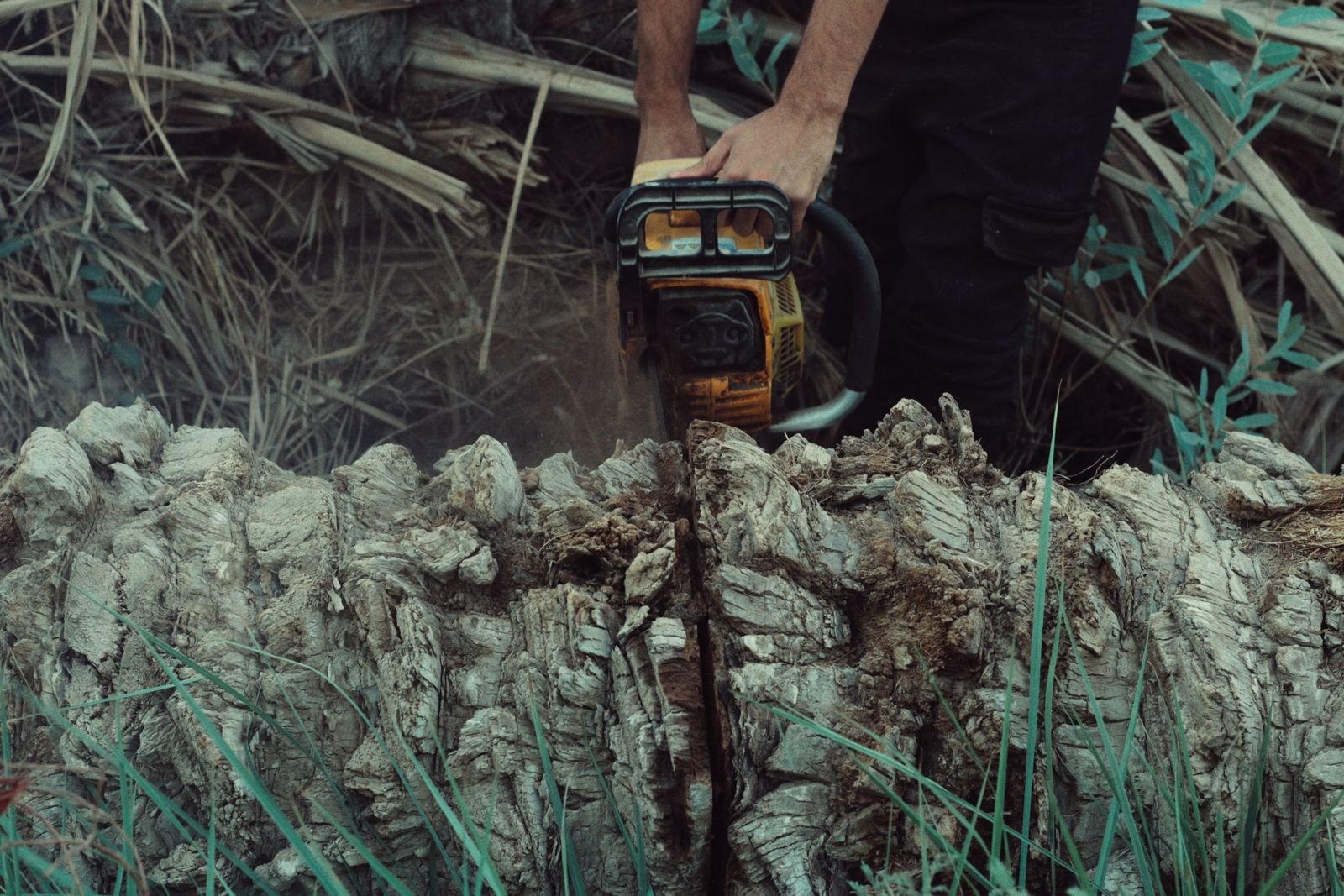
Cost by height
| Height | Angi | HomeGuide |
|---|---|---|
| Up to 30 ft | $150 – $450 | $200 – $500 |
| 30 – 60 ft | $450 – $1,200 | $500 – $1,500 |
| 60 – 80 ft | $800 – $1,500 | $850 – $2,000 |
| Over 80 ft | $1,000 – $2,000 | $1,200 – $2,500+ |
The two agree closely on small trees and diverge by about 25% at the top. Fixr uses different bands (60–100 ft, 100+ ft) which cannot be stacked into the same table, so we have left it out rather than mix incompatible figures.
What actually drives the price up
Height gets you the base number. Everything around the tree sets the rest. Per Angi, trees near power lines or structures add 25% to 50% — because the crew can no longer fell it, and has to take it down in sections.
When sections are not enough, a crane comes in: Angi puts crane service at $250–$600 a day and notes it can push a job to $6,000–$7,000. Fixr prices crane-assisted removal of 80+ ft trees at $1,500–$2,500. Cleanup and debris run $70–$95, and chipping $150–$250 for a two-hour rental.
Grinding versus removal
These are different jobs and the words get used interchangeably. Grinding chews the stump to below grade and leaves the root ball in the ground. Removal extracts stump and roots together.
| Job | Angi | HomeGuide |
|---|---|---|
| Stump grinding, average | $250 ($30–$1,600) | $120 – $400 first stump |
| Grinding, per diameter inch | $2 – $5 | $2 – $6 |
| Full stump removal, average | $369 ($195–$609) | $100 – $400 |
| Root removal | — | $500 – $1,000 (Fixr) |
| Chemical rotting | $60 – $200 | $100 – $200 |
| Additional stumps | $40 – $75 each | $30 – $60 each |
If you are replanting or laying a patio where the tree stood, you need removal. If you just want the lawn back, grinding is cheaper and sufficient.
Storm work costs two to three times more
Three sources converge here, which is unusual enough to trust. Fixr prices emergency removal at $450–$5,000 and states it is two to three times standard cost; HomeGuide cites the same 2–3× multiplier; Angi says urgent jobs can reach $5,000.
But Fixr adds a detail worth knowing: removing a tree that has already fallen costs just $75–$150. The premium is not for the storm, it is for taking down something still standing and unstable.
Insurance pays for the damage, then caps the cleanup
This is where people get an unpleasant surprise. Coverage is triggered by damage to a covered structure from a covered peril — windstorm, lightning, hail, fire — not by the tree falling. And even then the cleanup is sublimited: GEICO states many policies limit debris removal to $500 per tree and $1,000 per incident. Progressive, citing the Insurance Information Institute, gives the same $500–$1,000 shape.
Against an $850 average and up to $5,000 for emergency work, that sublimit is the story. Three more things worth knowing:
- A tree that hits nothing is your problem. Per Progressive, if a neighbour’s tree falls in your yard without damaging anything, you pay for removal — even if the tree was visibly dead.
- Rot and neglect are excluded. GEICO: if a tree was “clearly neglected — such as being dead, rotting, or posing a known hazard — insurance may deny coverage.”
- Preventive removal is never covered. Taking down a leaning tree before it falls is out of pocket, always.
The permit is cheap. The fine is not.
Permit requirements vary enormously, and by city rather than by state — we could find no national data on how many municipalities require one, so the only honest advice is to call yours.
What we can show you is the stake. San José, California requires a permit for a street tree, a heritage tree, any tree with a single trunk 38 inches or more in circumference at 4.5 feet, or any tree on multifamily or commercial property. Penalties run to $15,000 per street tree and $30,000 per heritage tree.
The permit itself costs $60–$150 per Angi and Fixr. Set against a possible $30,000 fine, the phone call is the highest-return five minutes in this guide.
On doing it yourself
We usually leave DIY to your judgement. Not here, and the reason is one statistic.
NIOSH data puts the fatality rate for grounds maintenance workers at 19.1 per 100,000 full-time workers in 2021, against 3.8 across all private industry — roughly five times the average. More telling: in an analysis of 93 fatality investigations covering 95 deaths, more than 66% occurred among tree care workers who had been on the job one year or less.
The risk is concentrated in inexperience. A homeowner has, by definition, zero years on the job. An arborist consultation is worth the call — though be aware the pricing on that is unresolved too: Fixr says $40–$450 for an inspection while Angi reports an average of $860, likely reflecting a full written hazard report rather than a site visit.
Working out your own number
- Measure the height. That sets your band: $150–$500 small, $1,000–$2,500 for anything over 80 feet.
- Anything near a structure or power line? Add 25–50%.
- Decide grinding ($250) or removal ($369) — they are different jobs.
- Call your city about a permit before you call anyone else.
- If it is already down and touched nothing, you may be looking at $75–$150, not $850.
Figures from Angi, HomeGuide and Fixr’s 2026 cost guides. Insurance positions quoted from GEICO and Progressive. Safety data from NIOSH. Permit example from the City of San José. Tree removal is not tracked by the Remodeling Cost vs. Value report.