Testing costs a few hundred dollars. Finding out mid-demolition costs a great deal more, and in one specific case it can also make you personally liable. This guide covers what both tests cost, what removal costs, and — more usefully — what federal law actually requires of you rather than what a contractor tells you it requires.
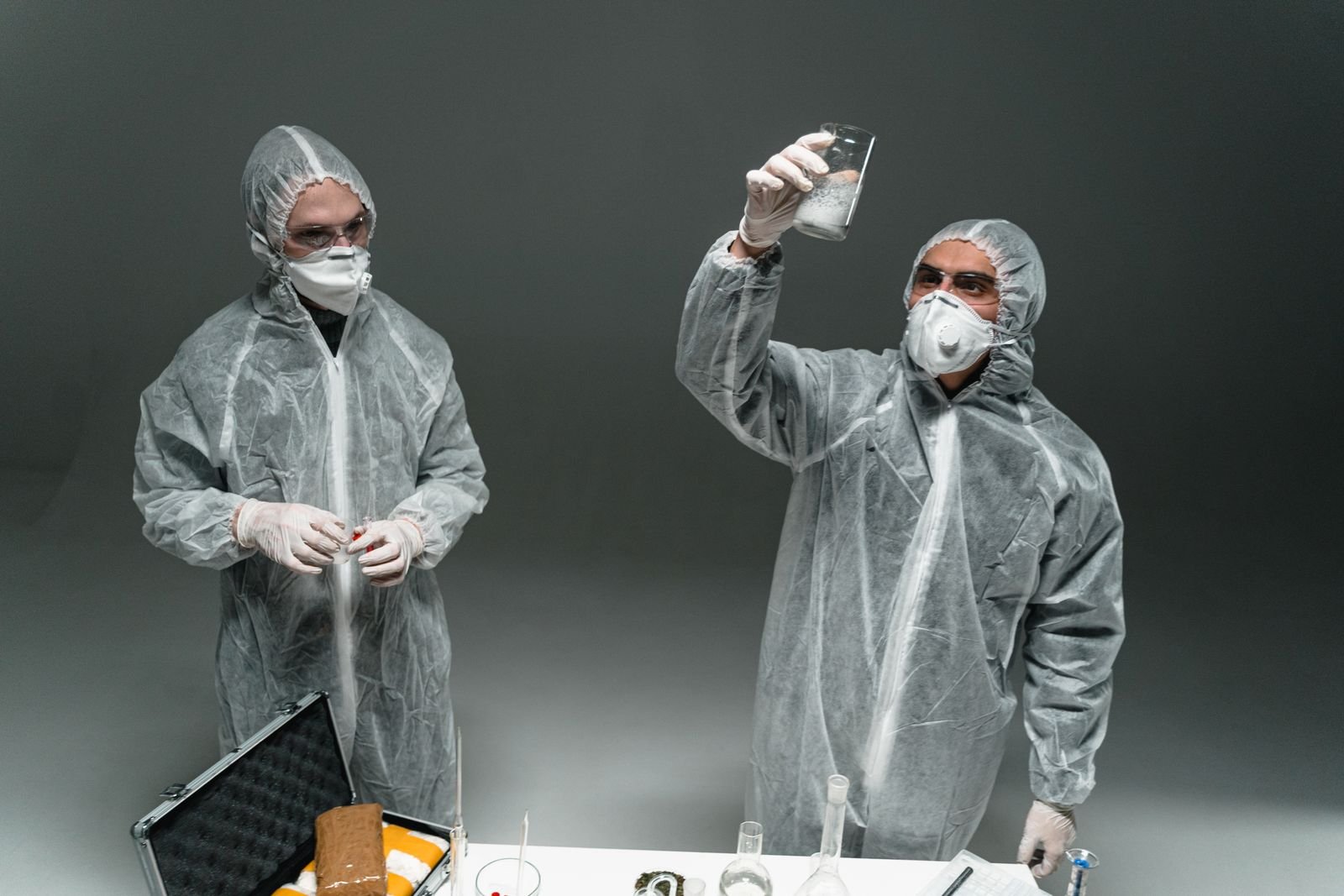
What testing costs
| Test | Cost | Source |
|---|---|---|
| Asbestos test, average | $483 ($231 – $776) | Angi |
| Asbestos air test | $200 – $800 | Angi |
| Asbestos bulk sample | $250 – $750 | Angi |
| Lead paint inspection | $300 – $700 (avg $500) | Angi, HomeGuide (agree) |
| Lead risk assessment | $500 – $1,500 | HomeGuide |
| XRF analysis | $300 – $600 | Angi |
| DIY lead test kit | $10 – $40 | Angi |
| Post-abatement clearance test | $150 – $400 | Angi |
The distinction people get wrong: an inspection tells you where lead is; a risk assessment tells you where lead is a hazard right now and what to do about it. The assessment costs two to three times more and is the one worth paying for if you have small children.
What removal costs
Asbestos — Angi puts the national average at $2,248, range $462–$6,100. This Old House says most homeowners spend $1,170–$3,120. Unusually, the two sources agree closely on the per-square-foot rates:
| Job | Per sq ft |
|---|---|
| Interior, general | $5 – $20 |
| Exterior, general | $50 – $150 |
| Popcorn ceiling | $9 – $20 |
| Attic insulation | $11 – $25 |
| Floor tile | $5 – $15 |
| Siding | $3 – $15 |
| Roof / shingles | $50 – $120 |
| Encapsulation (instead of removal) | $2 – $6 |
Exterior work costs roughly ten times interior work per square foot — a 1,000 sq ft exterior job is $50,000 to $150,000. Encapsulation, where the material is sealed rather than removed, runs 15–25% less than removal and is often the correct answer for material in good condition that nobody is going to disturb.
Lead — HomeGuide puts the average at $10,000, typically $3,000–$17,000, or $6–$17 per square foot. Encapsulation is $6–$10/sq ft, enclosure $8–$13, and removal $10–$17. Disposal adds $3–$5/sq ft. One caveat worth stating: we could not find a second source to cross-check that $10,000 average, so treat it as HomeGuide’s figure rather than a consensus.
The lead rule that catches renovators
The EPA’s Renovation, Repair and Painting Rule applies to anyone paid to disturb painted surfaces in homes, childcare facilities and preschools built before 1978. Certification has been mandatory since 22 April 2010. Firms must give occupants the “Lead-Safe Certified Guide to Renovate Right” before starting.
There is a homeowner exemption — the rule does not apply to you doing work in your own pre-1978 home. But read the exceptions carefully, because the exemption fails if you rent the home out, run a childcare business in it, or buy and renovate homes for profit. A flipper scraping their own paint in a pre-1978 house needs certification. That is not a technicality; it is the EPA’s own stated position.
There is also a minor-repair threshold: work disturbing less than 6 square feet per room inside, or 20 square feet outside, is exempt. But that exemption does not apply to window replacement, demolition of painted surfaces, or prohibited work practices. Windows never qualify as minor repair, regardless of area.
The asbestos rule that probably does not apply to your house
This surprises people. The asbestos NESHAP governs demolition and renovation work practices excluding residential buildings with four or fewer dwelling units. A single-family house sits outside it. OSHA rules govern employers and their employees, not a homeowner working on their own property. State and local rules may still prohibit DIY asbestos work — we did not survey all fifty states and are not going to pretend otherwise — but the federal picture is thinner than most articles suggest.
That is a legal observation, not a recommendation. This Old House’s position is unambiguous and we agree with it: homeowners should not attempt to remove asbestos themselves.
One more correction worth making. Asbestos was never fully banned in the United States. The EPA banned most asbestos products in 1989; the Fifth Circuit overturned that rule in 1991. Only in March 2024 did the EPA finalise a prohibition on chrysotile asbestos. So the common “anything after 1980 is fine” rule of thumb is a heuristic, not a legal or manufacturing cutoff — and we could not find a primary source establishing it at all.
Selling: lead is federally mandated, asbestos is not
For most pre-1978 housing, sellers and landlords must: give buyers the “Protect Your Family From Lead In Your Home” pamphlet, disclose known lead-based paint and hazards, hand over all available records and reports, include a Lead Warning Statement in the contract, allow buyers a 10-day period to conduct an inspection or risk assessment, and keep the signed disclosure for three years. Exemptions cover zero-bedroom units, leases under 100 days, certified lead-free housing and post-1977 construction.
Asbestos has no federal equivalent. Disclosure depends entirely on state law, and while many states include asbestos on their seller disclosure forms, we could not find a reliable count — so check your state rather than assuming either way.
Working out your own number
- Test before you plan, not after you start. $483 for asbestos, $300–$700 for a lead inspection.
- If children live there, pay for the risk assessment ($500–$1,500), not just the inspection.
- Ask whether encapsulation is viable — $2–$6/sq ft against $5–$20 for asbestos removal.
- If any part of the job is exterior asbestos, get that priced separately. It is roughly ten times the interior rate.
- If you are renovating to sell, or renting the place out, assume the RRP Rule applies to you.
Cost figures from Angi, HomeGuide and This Old House’s 2026 guides. Regulatory content from the EPA’s RRP Program, asbestos regulation and real estate disclosure pages, and 40 CFR 745.83. Neither testing nor abatement is tracked by the Remodeling Cost vs. Value report. This is not legal advice — verify state and local requirements before starting work.